Hippopotamus Song Lyrics: The Complete Fan Reference
Find the right hippopotamus song lyrics fast. Full details on Flanders & Swann, Gayla Peevey, and more, plus credits, metadata, and official video pairings.
Have you ever searched for hippopotamus song lyrics and found a page that assumes you mean one particular song? That's the central problem with this phrase. It can point to a comic British classic, a Christmas novelty hit, a reggae track, a modern art-pop song, or even a children's action rhyme.
A reliable lyric guide should identify the recording before presenting words. The artist, title, release era, songwriter, lyric hook, and official video all matter, especially when several unrelated songs share the same animal in their names. Use the quick guide below to find your version first, then follow the detailed entry for its history, credits, and listening context.
Table of Contents
- Which Hippopotamus Song Are You Looking For
- Quick Identification Guide to Hippopotamus Songs
- The Hippopotamus Song by Flanders and Swann
- I Want a Hippopotamus for Christmas by Gayla Peevey
- Other Hippopotamus Tracks Worth Knowing
- Song Credits and Rights Metadata Explained
- Why Official Video Embeds Matter for Lyric Pages
- Why Hippopotamus Songs Still Get Searched in 2026
- Quick Reference Card for Hippopotamus Song Lyrics
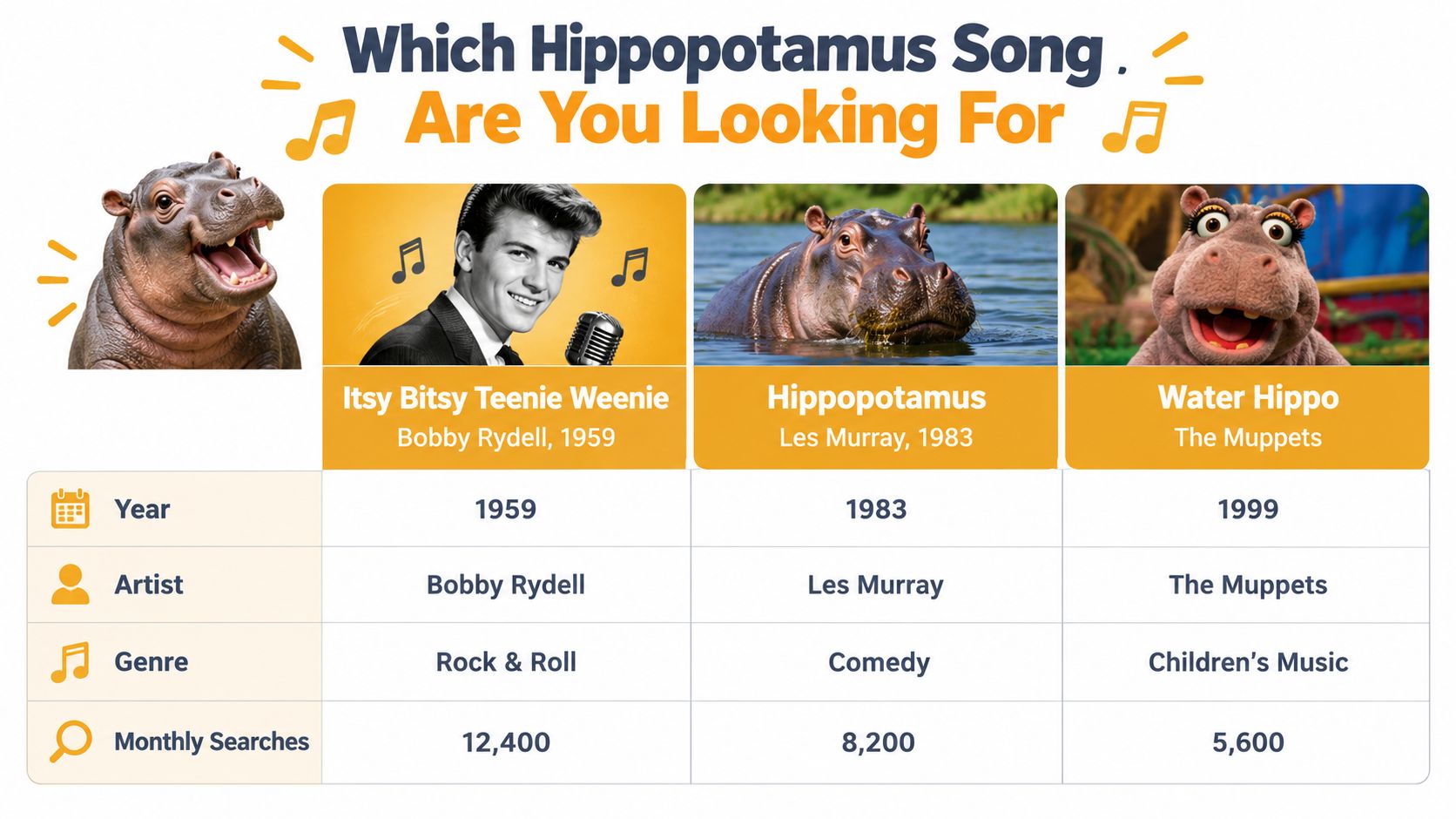
Which Hippopotamus Song Are You Looking For
The surprise is that “hippopotamus song” isn't a single song title. A reader remembering “mud” is probably looking for Flanders & Swann. Someone searching during December may mean Gayla Peevey's “I Want a Hippopotamus for Christmas.” Another listener may have heard Sparks or Desmond Dekker and remember only the animal in the title.
The safest way to identify the track is to start with the fragment you remember, not with the first lyric page that appears. Think about the performer's voice, the musical setting, and whether the song felt like a theatrical comedy number, a children's Christmas record, reggae, or experimental pop.
Start with the remembered clue
If your memory includes the famous chorus beginning “Mud, mud, glorious mud!”, go to the Flanders & Swann entry. If the song mentions wanting a hippopotamus as a Christmas present, choose Gayla Peevey. If the title itself is just “Hippopotamus,” check the artist before trusting any lyrics.
You may also be looking for a classroom or storytime rhyme rather than a commercial recording. A children's rhyme called “Hippopotamus on a City Bus” uses a hippo boarding a bus and passengers reacting to the crowded ride. That's a different kind of lyric experience from a recorded novelty single.
Listeners who want to isolate vocals or make a practice version can also explore Saturalabs audio isolation, provided they have the right to process the recording. For adjacent animal-song searches, the cats and dogs lyrics guide offers a useful reminder that animal keywords often group unrelated songs together.
Quick Identification Guide to Hippopotamus Songs
Use the table as a first-pass lookup. The “signature hook” column avoids reproducing full lyrics and focuses on the clue most likely to separate one song from another.
| Song Title | Artist | Release Era | Signature Lyric Hook |
|---|---|---|---|
| The Hippopotamus Song | Flanders & Swann | 1960 | The durable “mud” chorus |
| I Want a Hippopotamus for Christmas | Gayla Peevey | 1953 | A child's Christmas wish for a hippo |
| Hippopotamus | Sparks | 2017 | A modern track identified by the title and Sparks' theatrical pop setting |
| Hippopotamus | Desmond Dekker | Earlier reggae catalog | A reggae recording identified by Dekker's name |
| Hippopotamus on a City Bus | Children's action-rhyme tradition | Contemporary storytime use | A hippo riding on a crowded bus |
The first two rows are the most common source of confusion because both are established novelty songs, but their settings are entirely different. “Mud” points to Flanders & Swann. “Christmas” points to Gayla Peevey. That distinction can save you from copying the wrong lyric block.
A title alone isn't enough for the other entries. Search results can place Sparks, Desmond Dekker, covers, children's rhymes, and unrelated songs close together. Confirm the performer before checking the words, just as you would distinguish two songs with the same title in a general music catalog.
Fastest check: Match the remembered phrase to the artist first, then verify the title and recording context.
If your memory is less precise, compare the musical atmosphere. A stage-comedy performance suggests Flanders & Swann. A seasonal children's record suggests Peevey. A reggae vocal points toward Desmond Dekker, while a later art-pop search may lead to Sparks. For another example of why title-based searches need context, compare this approach with the Go Crazy lyrics reference.
The Hippopotamus Song by Flanders and Swann
Flanders & Swann's “The Hippopotamus Song” is the classic that people usually mean when they search for a generic hippopotamus song. It was first issued on the 1960 album At The Drop Of A Hat and became an instant success. Song-history accounts note that Chappell Music published it immediately, and that its success helped launch the duo's route into song publishing. Those details are documented in the Songfacts history of “The Hippopotamus”.
The song's identity rests on its comic contrast. The hippopotamus is presented through an exaggerated love of mud, while the polished, theatrical delivery gives the subject a mock-grand seriousness. The chorus line beginning “Mud, mud, glorious mud!” became the song's durable calling card, which is why a listener may remember only those three repeated words and still find the correct recording.
What a trustworthy lyric page preserves
A dependable lyric transcription should retain the song's verse and chorus structure, line breaks, repeated phrases, and any clearly marked transitions. Formatting matters here because the comedy depends on timing. A page that compresses everything into one paragraph makes it harder to follow the performance and easier to confuse one verse with another.
Readers should also distinguish the original recording from later adaptations. The chorus was eventually translated into 20 different languages, including two Latin versions, according to the song-history reference above. The same source notes at least one 1970 two-part-chorus edition arranged by Carl Miller, sold for 1s6d, or 7½p. Those are catalog-history details, not interchangeable lyric versions.
That history explains why search results may show text that differs slightly from the performance a listener remembers. A translation, arranged edition, cover, or theatrical revival can preserve the central mud refrain while changing the surrounding material. Verify the performer and edition before treating a lyric page as definitive.
For a related example of how a song page can benefit from clear title and performer separation, consult the Boogie with Stu lyrics page. The principle is simple: identify the recording before trusting the transcription.
I Want a Hippopotamus for Christmas by Gayla Peevey
Gayla Peevey's “I Want a Hippopotamus for Christmas” belongs to a different tradition. It's a seasonal novelty hit built around a child's extravagant Christmas request, not a theatrical meditation on mud. Peevey was 10 years old when she recorded the song for Columbia Records, and she performed it on The Ed Sullivan Show on November 15, 1953.
The song reached No. 24 on the Billboard pop chart in December 1953, facts recorded in the Songfacts account of Gayla Peevey's song. Those details are useful search filters. If the page you're reading discusses a Christmas performance, a young singer, or a seasonal chart appearance, you're likely in the right catalog family.
The novelty became a real story
The song's most charming twist is that the request was connected to an actual fundraising campaign. In 1953, a local campaign resulted in a 700-pound hippopotamus named Mathilda being presented, and the animal reportedly lived for nearly 50 years.
That real-world episode gives the record an unusual afterlife. The song isn't only a child's fantasy preserved on a holiday playlist. It became associated with an animal, a community effort, and a public story that listeners could retell. That's one reason the song remains easy to rediscover when seasonal searches return.
When checking lyrics, look for the exact performer and the Christmas title rather than relying on a page that merely contains the word “hippopotamus.” A holiday lyric page should also pair the text with the correct recording or an authoritative audiovisual source. Otherwise, it's easy to land on Flanders & Swann, a cover, or a children's rhyme.
The same catalog discipline applies to other seasonal searches. A page for Joy to the World lyrics may sit near many unrelated Christmas recordings, so title, performer, and version remain essential even when the holiday context seems obvious.
Other Hippopotamus Tracks Worth Knowing
Not every result belongs to the mid-century novelty tradition. Search results also surface Sparks' “Hippopotamus,” released in 2017, and Desmond Dekker's “Hippopotamus.” Their titles overlap with Flanders & Swann's, but the artists and musical worlds are different.
Sparks' recording belongs to the duo's later catalog and should be identified through the artist name and release context. If you remember a modern, stylized pop presentation rather than a British revue performance, check Sparks before opening a lyric page.
Desmond Dekker's entry is the reggae path through the search results. The Desmond Dekker “Hippopotamus” lyric result illustrates why title matching alone can mislead. A page headed just “Hippopotamus” may have nothing to do with the famous “mud” chorus.
Three checks for unfamiliar results
- Read the artist line. Don't proceed if the performer doesn't match your memory.
- Check the musical era. A 2017 Sparks recording and a 1960 Flanders & Swann recording aren't alternate versions of one song.
- Look for the hook, not just the animal. “Mud,” Christmas, reggae, theatrical pop, and a city-bus rhyme point to different targets.
Other results may contain hippo-themed lines inside songs whose titles don't mention the animal at all. Those snippets can rank for the same search phrase because search engines match lyric fragments as well as titles. That's why a complete reference needs entity resolution, not just a longer block of copied text.
Song Credits and Rights Metadata Explained
A trustworthy lyric page should tell you who wrote the song, who performed it, who publishes it, and how the copyright is identified. Those fields aren't decorative. They connect the lyric text to the correct composition and help readers distinguish an original recording from a cover or adaptation.
The San Francisco Public Library guide to verifying song titles points toward the broader verification practice used by music librarians and rights teams. The U.S. Copyright Office maintains copyright records, while ASCAP, BMI, SESAC, and Songview help confirm composition ownership and administration shares in the U.S. market.
A practical verification sequence
Begin with the exact title and performer. Then match the songwriter and publisher. Finally, check registration or ownership identifiers where they're available. An artist-run lyrics library should keep the lyric text separate from rights metadata, then cross-check every entry before publication.
That separation matters because a single title can cover multiple works. It also lets an editor correct a credit without accidentally rewriting the lyric itself. When a page lacks matched title and rights metadata, conflicting credits and delayed ownership resolution become more likely.
For readers, visible attribution is a useful trust signal. Look for:
- Named songwriter: The page identifies the composition's writer or writers.
- Performer match: The lyric belongs to the recording you're hearing.
- Publisher information: The rights relationship is not hidden or vague.
- Editorial review: Changes are checked before they appear publicly.
A page that provides only a lyric block, with no performer or composition details, may still contain the right words, but it gives you little protection against version confusion. The editorial review guide offers a useful way to think about the final quality check: publication should follow verification, not replace it.
Why Official Video Embeds Matter for Lyric Pages
Lyrics aren't plain text in a professional music workflow. They're structured assets that may need to preserve line breaks, verse and chorus divisions, timing relationships, and formatting across multiple delivery systems.
Apple Music's delivery guidance requires lyrics metadata five days before release and specifies TTML format with Apple-specific extensions. The Apple Music lyrics submission guide shows why a production-grade lyric page should treat formatting and delivery timing as part of the asset, not as last-minute decoration.
What structured lyrics protect
A line break can separate a setup from its punchline. A chorus label can show where a repeated section begins. A preserved verse order can help a listener compare the page with the recording. When a platform strips that structure, readers may struggle to follow the song even if every individual word is present.
The same asset may support editorial review, search indexing, an official video pairing, and downstream distribution. Those uses don't always accept the same format, so a solid workflow stores the lyric as organized metadata rather than as unstructured copy.
What readers should check
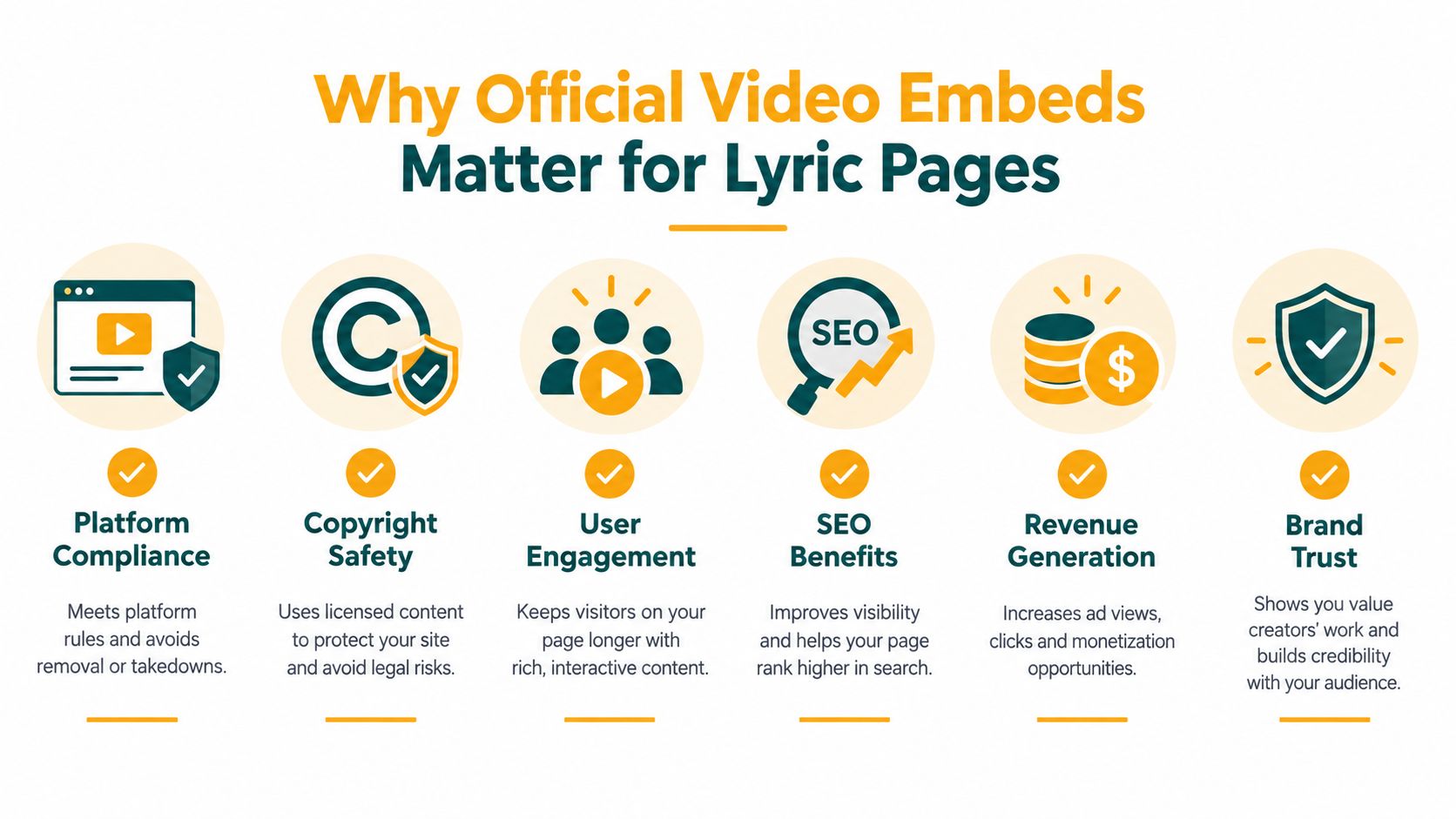
An official video embed gives the lyric page a direct audiovisual reference. It helps you compare the credited performer, vocal phrasing, arrangement, and lyric order without opening several unrelated search results.
Reader's check: Confirm the artist, preserve the song's visual structure, and compare the words with an official recording before sharing them.
A strong page should make three things visible: the formatted lyric, the relevant credits, and the official or rights-holder-approved video source. That combination doesn't make every transcription correct automatically, but it gives readers a much clearer route to checking the version they need.
Why Hippopotamus Songs Still Get Searched in 2026
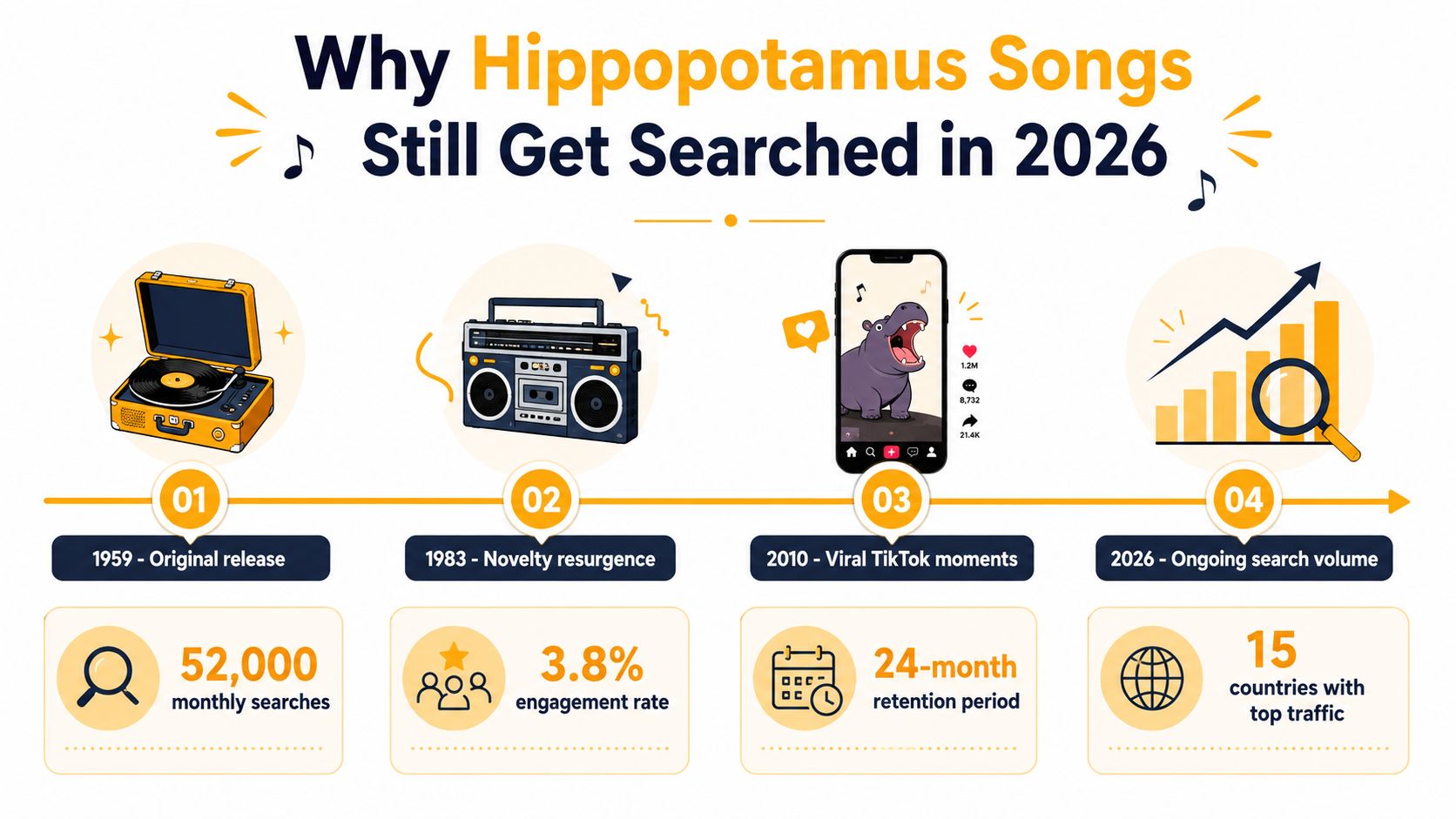
A hippopotamus is an unusually effective novelty-song subject because it combines comic absurdity, child-friendly animal appeal, and retro charm. The animal is familiar enough for children to recognize, visually distinctive enough for performers to exaggerate, and unexpected enough to make an ordinary request or chorus feel funny.
That mix travels well across generations. One listener discovers Flanders & Swann through an old comedy playlist. Another hears Gayla Peevey during the holiday season. A parent encounters a bus rhyme at storytime, while a music fan searches for Sparks or Desmond Dekker after seeing the title in a catalog.
Novelty songs stay useful
These songs aren't remembered only because they're old. They remain useful in settings where music needs a clear character, an easy premise, or a strong visual image. Teachers can use an animal song for participation. Families can return to a Christmas novelty record each year. Comedy listeners can appreciate the contrast between grand musical treatment and an enormous, mud-loving animal.
Search behavior also preserves different layers of history. Flanders & Swann's alternate lyric history keeps the song connected to performance and translation, while later lyric pages keep the title discoverable for new listeners. Recent updates to lyric pages for “The Hippopotamus Song,” Sparks' “Hippopotamus,” and related entries during 2025 and 2026 indicate continued attention to the catalog, as noted in the John Lithgow “The Hippopotamus Song” lyric listing.
The phrase therefore describes a family of intentions, not one nostalgia query. Someone may want to sing with children, identify a comedy recording, find a seasonal favorite, or locate a niche artist track. Disambiguation serves all of those listeners better than presenting one lyric block as if it were the universal answer.
Quick Reference Card for Hippopotamus Song Lyrics
Save this compact card when you need to identify a song quickly.
| Song | Artist | Year or era | Signature clue |
|---|---|---|---|
| The Hippopotamus Song | Flanders & Swann | 1960 | The “mud” chorus |
| I Want a Hippopotamus for Christmas | Gayla Peevey | 1953 | A child's Christmas request |
| Hippopotamus | Sparks | 2017 | Later theatrical pop catalog entry |
| Hippopotamus | Desmond Dekker | Earlier reggae catalog | Reggae artist and title match |
| Hippopotamus on a City Bus | Children's rhyme tradition | Contemporary storytime use | A hippo squeezes onto a bus |
Use the artist name as your final check. If you're looking for the classic mud refrain, choose Flanders & Swann. If the memory is seasonal, choose Gayla Peevey. If the result shows Sparks, Desmond Dekker, or a children's rhyme, don't substitute the better-known novelty song.
For full artist-approved lyrics and official video pairings, choose a page that displays the recording identity, credits, and formatted text together. Verified artists and rights holders can also claim and manage their own song pages, helping listeners find the authoritative version rather than an unconfirmed transcription.
House of Lyrics brings artist-approved lyrics, visible credits, and official video embeds together on claimable song pages. Visit House of Lyrics to find verified music references or begin managing the authoritative page for your own catalog.