Celebrad a Cristo Letra: Find the Right Version
Find the right celebrad a cristo letra fast: Spanish lyrics, refrain variants, credits and the official video for each version, with sources you can check.
What if the lyric you copied is correct for a recording, just not for the recording your church is about to play? That's the puzzle behind Celebrad a Cristo letra. One joyful Spanish title, meaning Celebrate Christ, points to several recordings, more than one refrain wording, and pages that don't always tell you which version they're showing. Don't worry. Once you learn to check the artist, album, and refrain together, you'll find your version with confidence.
Table of Contents
- Which Celebrad a Cristo Recording Matches Your Search
- Title Variants and Related Searches
- Refrain Variants and What They Mean
- Where the Spanish Title Comes From
- How to Match Your Search to One Recording
- What a Trustworthy Lyric Page Shows
- Singing, Projecting and Permissions in Church
- Confirm Your Version and Find the Official Video
Which Celebrad a Cristo Recording Matches Your Search
A search for Celebrad a Cristo letra can open any of several recordings. The Spanish title means Celebrate Christ, and more than one performance uses it. Name the recording before you sing it or put the words on a screen.
Celebrad a Cristo Recordings at a Glance
| Recording | Credited artist or writer | Release | Length and notes |
|---|---|---|---|
| Cara a Cara | Danilo Montero, writer credited as Luis Danilo Montero | 1991 | 3:56. The indexed result shows 332,924 Spotify plays on the Spotify track listing for Danilo Montero. |
| Más Que Vencedor | Palabra en Acción with Juan Carlos Alvarado | January 1, 1991 | Separate 1991 album from Cara a Cara, with Juan Carlos Alvarado, on the Apple Music song listing for Palabra en Acción. |
| En Tu Presencia | Don Moen, singer, lyricist, and composer | 2015 | 3:57, with those credits on the JioSaavn catalog entry for Don Moen. |
| Grupo Nueva Vida single | Grupo Nueva Vida | March 10, 2017 | One-song single. |
| ¡Celebrad a Cristo, Celebrad! | Coro Alegria, composer Yennifer Valbuena | March 18, 2026 | 2:27 track on a one-song album, on the Gaana artist page for Yennifer Valbuena and the Gaana album page for ¡Celebrad a Cristo, Celebrad!. |
Look at the first two rows. Two artists released this title in 1991. A title-only search cannot tell Danilo Montero, heard with Sígueme Internacional, from Palabra en Acción with Juan Carlos Alvarado.
That 1991 pair is the fork in the road. By the early 1990s, Spanish-language worship albums were already traveling on physical recordings and through church networks. A loved resurrection song could pass from one congregation to another, then be recorded again for new listeners. Same title, different performance, and at least two refrain wordings. Identify the version before anyone sings or projects it.
Your First Identification Habit
Write it down first: Note the artist, album, and year of the version you want before you copy a single line.
A worship leader sends a link and says, "Please prepare Celebrad a Cristo." Open that link. Read the artist, then the album and the year. Those three details work like the label on a choir CD: they tell you which disc is in the player, not only which title is printed on the case.
The same check helps with other worship songs whose titles repeat across artists. Comparing versions of resurrection songs is the job of our Happy Day lyrics guide. For Celebrad a Cristo, stay with artist, album, and year. They steer every later check of wording, translation, and permission.
At home, a small mismatch only changes what you hum. On Sunday the congregation sings the screen while the band plays the track in their ears. If those two disagree, the room splits.
Title Variants and Related Searches
You've probably typed this title more than one way. That's normal, and search engines often treat the variants as the same request.
Spellings That Usually Belong Together
- Celebrad a Cristo: The short title most recordings use.
- Celebrad a Cristo, celebrad: The fuller form, with a comma and the repeated word from the refrain opening.
- ¡Celebrad a Cristo, Celebrad!: The exclamation form used on the Coro Alegria album.
- Celebrad A Cristo: A capitalization variant where the small word "a" becomes "A" in some listings.
- Celebrate Jesus: The English title behind the Spanish translation.
These variants usually point to the same work family. They don't identify one recording. Punctuation tells you very little, while the artist, album, and year tell you almost everything.
Choose Your Starting Point
If you know only the title, start with the version table and pick a likely artist. If you know a line from the refrain, start with the refrain comparison. If you know the artist, go straight to the matching steps and confirm the album and duration.
Watch for lookalike titles in other languages. Shazam lists Celebrai a Cristo by 3 Palavrinhas as a 2024 children's-music release at 144 BPM on its Shazam song page for Celebrai a Cristo. That's Portuguese, a different artist, and a different song, even though the title looks close at a glance.
Spanish searches can wander in other directions too. A reader hunting for a tender Spanish ballad might land on our Mi Princesa letra guide, which is lovely, but it won't help a worship team prepare a resurrection refrain. Check the language and artist on every result before you follow it, especially when you're working quickly before a service.
Refrain Variants and What They Mean
Here's where versions part ways. The verses may look similar across pages, but the refrain, the part everyone sings loudest, appears in at least two wordings.
Refrain Wording by Source
| Refrain wording | Where it appears | What to check |
|---|---|---|
| Él vive… y por siempre reinará | Danilo Montero's Cara a Cara version, matching the credited writer Luis Danilo Montero | Confirm the album and artist match your recording |
| resucitó… y por siempre él vivirá | Other lyric pages, which drop or change the reinará line | Compare line by line against an artist-approved text |
The first wording stresses that Christ lives and will reign forever. The second stresses that he rose and will live forever. Both celebrate the resurrection, but they aren't interchangeable on a projection screen. Singers following the recording will expect one phrase while the screen shows another.
The Musixmatch page for Danilo Montero's Celebrad A Cristo reflects the Cara a Cara association, with the refrain "Él vive… y por siempre reinará" and a writer credit for Luis Danilo Montero. A separate hymn record instead connects the Spanish text to Gary Oliver's English song, originally copyrighted in 1988 by Integrity's Hosanna! Music. Other lyric pages print "resucitó… y por siempre él vivirá" without explaining the change.
Three Questions to Ask
Don't assume somebody typed the lyric wrong. Ask these questions instead.
- Authorized translation: Did a rights holder approve this Spanish wording?
- Congregational adaptation: Did a church or artist adapt the refrain for local singing?
- Distinct song or arrangement: Is this a separate work or arrangement that shares the title?
Those possibilities matter because a difference can be legitimate. Artists adapt phrasing for melody, emphasis, or a new arrangement, and translators make choices too. The sources available here don't settle which Spanish wording is authorized for every use, so you shouldn't declare one fan-posted text the universal winner.
That's why provenance helps. At House of Lyrics, we only host lyrics submitted by the artist or rights holder. A text tied to a named recording and a verified contributor gives you something solid to check against, instead of an anonymous page with no album or writer credit.
When a refrain differs, use the version whose artist and album match your recording, and compare it line by line before projecting.
Quote only short refrain fragments while you're checking. You don't need to copy full verses into notes or messages. The fragment with reinará or vivirá is usually enough to tell two versions apart.
Where the Spanish Title Comes From
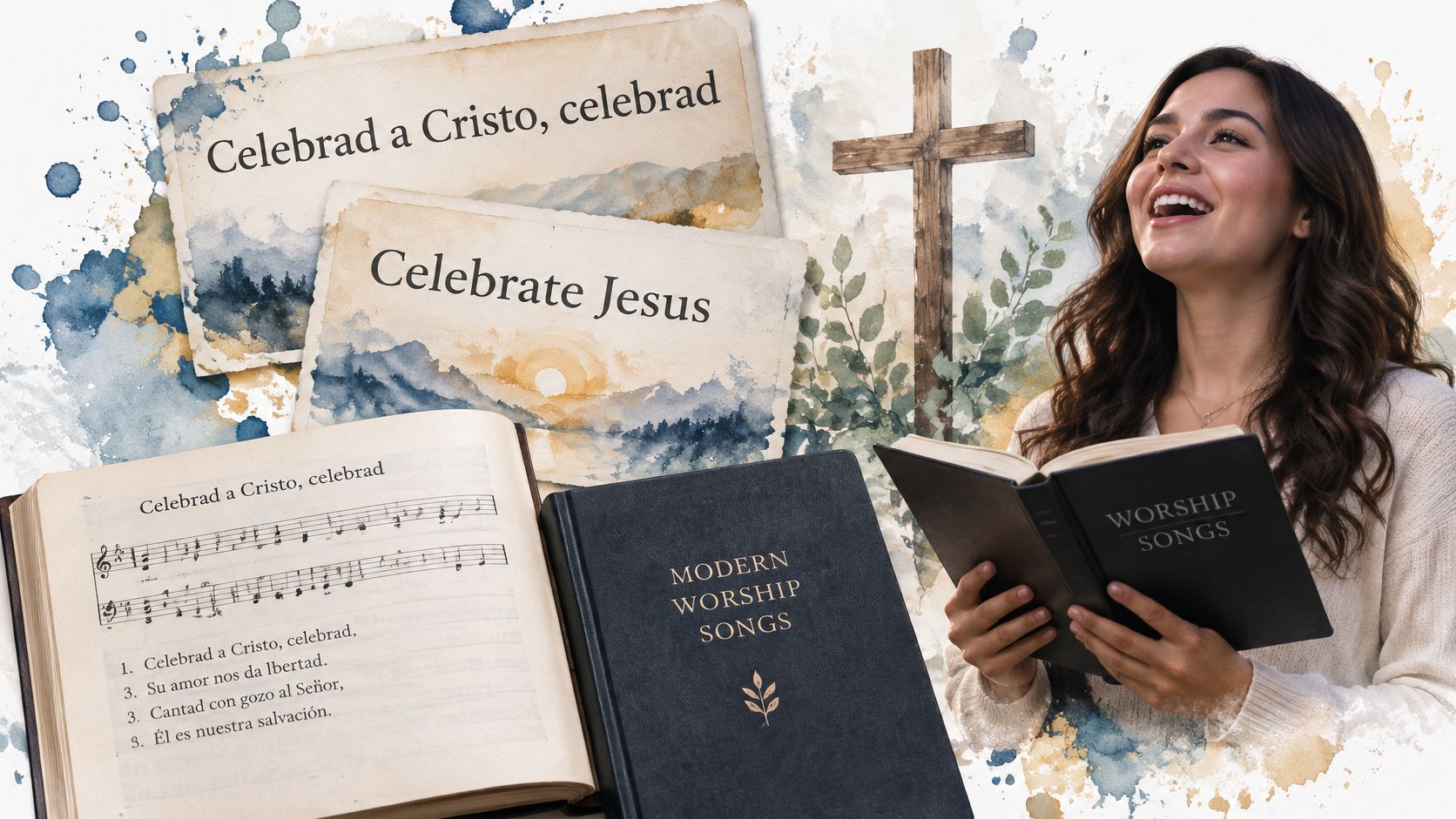
A Spanish search title often arrives already translated. Hymnary catalogs Gary Oliver as the author and records "Celebrad a Cristo, celebrad" as the Spanish translation of his worship song "Celebrate Jesus" on the Hymnary text page for Celebrate Jesus. The central refrain names the resurrection of Jesus and his continuing life, which is why the song sits so naturally in Easter and other resurrection services.
A translation is a new wording of an existing work, the way a bilingual hymnal prints the same song on facing pages. It does not wipe out the original author's credit. When a page drops that credit, you cannot tell a translation from a new Spanish song that only borrowed the title.
How a Good Catalog Links the Versions
A Spanish lyric page should not float by itself. It should point back to the translated work and keep the fields apart.
The original title stays Celebrate Jesus. The translated title stays Celebrad a Cristo, celebrad. Author and composer attribution names the credited creator of the underlying work. A translation note says the Spanish text translates the English work. The refrain opening is stored with its language: Spanish, English, or another language.
With those fields, Spanish, English, and French versions can sit side by side without their lyric texts melting into one entry. Each language keeps its own wording and attribution. Readers can still see that the versions belong together.
An ideal result works like a library card for one hymn, with a separate shelf card for each recording. You search the Spanish title. The page shows the English original as the source work. Under it, each Spanish recording appears as its own entry, with artist, album, and year. You choose the recording first. Then you read the lyric attached to that recording.
One check covers everyday searching. When you find a Spanish page, look for Gary Oliver or a Spanish writer. That credit tells you whether the page is presenting a translation, an arrangement, or a text it has not explained at all.
How to Match Your Search to One Recording
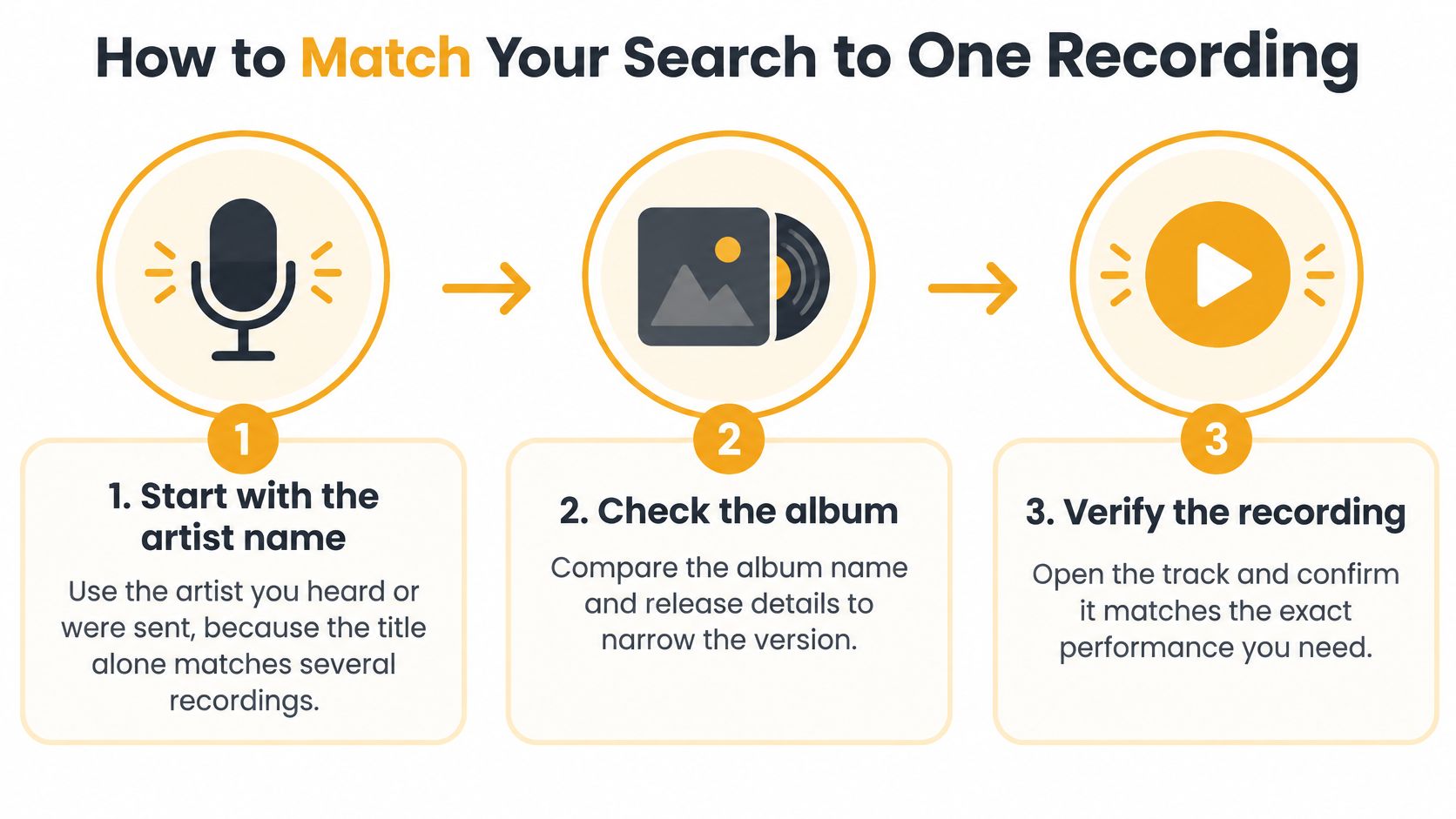
Let's turn everything into a method you can use in a few minutes. Follow the steps in order, because each one narrows the field.
Six Checks That Settle It
- Start with the artist name. Use the artist you heard or the name in the link somebody sent you. The title alone matches several recordings, so trusting it is the most common slip.
- Check the album and release year. Notice that 1991 appears twice, for two different artists, while other versions arrived in 2015 and 2017. The year narrows your search, but it doesn't finish the job by itself.
- Compare the duration. The Cara a Cara recording runs about 3:56, the Don Moen version runs 3:57, and the 2026 Coro Alegria track runs 2:27. Allow a few seconds for player rounding, but a big gap means you're looking at a different recording.
- Read the refrain. Decide whether your recording sings reinará or vivirá. Don't assume one lyric page covers every version, because this is the point where pages disagree.
- Confirm the writer credit. Check the name against the version table. A writer credit that belongs to another recording is a warning sign, even if the title matches perfectly.
- Record the identifiers together. Write the artist, album, and year in your notes before copying any text. Future you, and the next volunteer, will be grateful.
What a Confirmed Match Looks Like
Say your worship leader played a track and the screen showed Danilo Montero. You check and find Cara a Cara, 1991, a duration near 3:56, the reinará refrain, and a writer credit that fits. Everything agrees. That's a confirmed match.
Now say the artist fits but the refrain on a lyric page uses the other wording. Stop there. Don't paste the text into your slides and hope nobody notices. Find a page tied to your recording, or ask the worship leader which arrangement the band learned.
Confirmed match: Artist, album, year, duration, and refrain all agree. If one item disagrees, keep looking.
This method feels slow the first time. It gets fast quickly, and it prevents the awkward moment when the congregation stumbles because the screen and the singers part company.
What a Trustworthy Lyric Page Shows
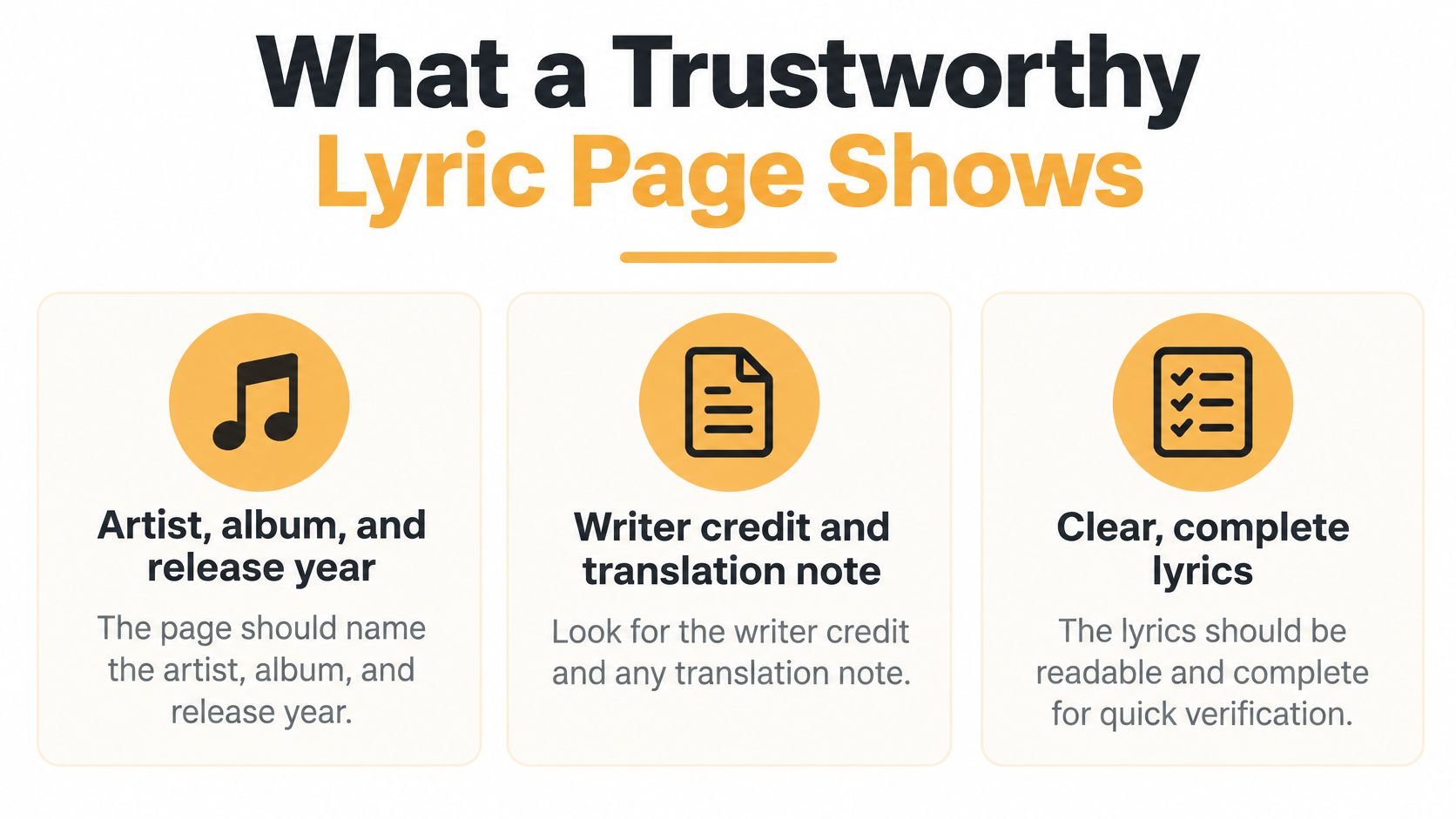
You can judge a lyric page in under a minute once you know what to look for. Use this checklist before you rely on any text.
The Quick Checklist
- Artist, album, and release year: These name the exact recording, so you aren't guessing which version the text belongs to.
- Writer credit and translation note: Without a writer credit, you can't answer questions about translation or adaptation later.
- Language clearly labeled: The Spanish text and any English translation should appear separately, not blended together.
- Refrain that matches your version: One glance at reinará or vivirá tells you whether the page fits your recording.
- Copyright notice and rights holder: This attribution shows who owns the work and who a church should contact about use.
- Approval status: The page should state whether the lyric is artist-approved or fan-submitted, because a fan text can look definitive while carrying errors.
- Official video embed: A video from the artist's official source anchors the page to the same recording, unlike a random user upload.
- Links to artist or album pages: These connections let you verify the catalog details instead of trusting one isolated page.
Students learning how licensed lyrics reach streaming platforms can also read this Spotify lyrics guide for music students for helpful background on how lyric delivery works behind the scenes. It won't identify your recording, but it explains why approved texts matter.
If you're building a general search habit, our guide on how to find song lyrics walks through the same careful approach for other songs. The principle travels well. Good pages show their sources.
Apply the stop-and-check rule. If several checklist items are missing, treat the page as a reference only and look for the artist's own release. A clean layout doesn't make a lyric accurate.
Singing, Projecting and Permissions in Church
Here's the assumption to retire today. A lyric on a webpage is not automatically free to copy, project, translate, or adapt.
Identification and permission are two different tasks. The Worship Leader App song page for Celebrad a Cristo illustrates the wider problem, since search results mix lyrics, chords, language, and translation without consistently showing permission status. One result may offer chords and a compact refrain, while another offers an English translation tied to Cara a Cara. Neither format, by itself, proves that the displayed text is licensed for reuse.
What Churches Usually Need
Projecting lyrics in a service is usually handled through a church licensing service or directly with the rights holder. The writer, publisher, and copyright notice on your chosen version show you who to contact. If your page hides those credits, you can't complete this step, which is another reason the checklist matters.
Translation and adaptation need extra care. A new translation or a congregational adaptation may need its own permission from the rights holder of the original work. Public-domain material is handled differently, so don't treat every old-sounding worship song as public domain. Check the copyright line for the specific version you're using.
Cite the Version You Actually Used
For each service, record these details with your service plan.
- Artist and album: The recording your team learned from.
- Release year: The year that separates your version from the others.
- Writer credit: The name attached to the underlying work or arrangement.
- Copyright line: The notice shown for that version, kept exactly as credited.
- Permission source: The license or rights-holder approval your church relied on.
An artist-approved page helps you identify the right version, but it isn't a licence on its own. On our site, submitted lyrics, chords, or media are reviewed by the song owner or House of Lyrics editors before they appear. That review supports accuracy, while your church still handles its own licensing for projection and copying.
If you're also preparing how the choir will look while singing, this guide to choosing apparel for your choir covers the practical side of robes and coordinated dress. Pair that preparation with our overview of music rights management so the paperwork receives the same attention as the presentation.
Keep the permission source on file with the service plan, not in somebody's email inbox. When a new volunteer asks next Easter, "Can we project this?", your folder will already hold the answer, the version, and the credits.
Confirm Your Version and Find the Official Video
You're ready for the final decision. Keep it simple and work through four confirmations.
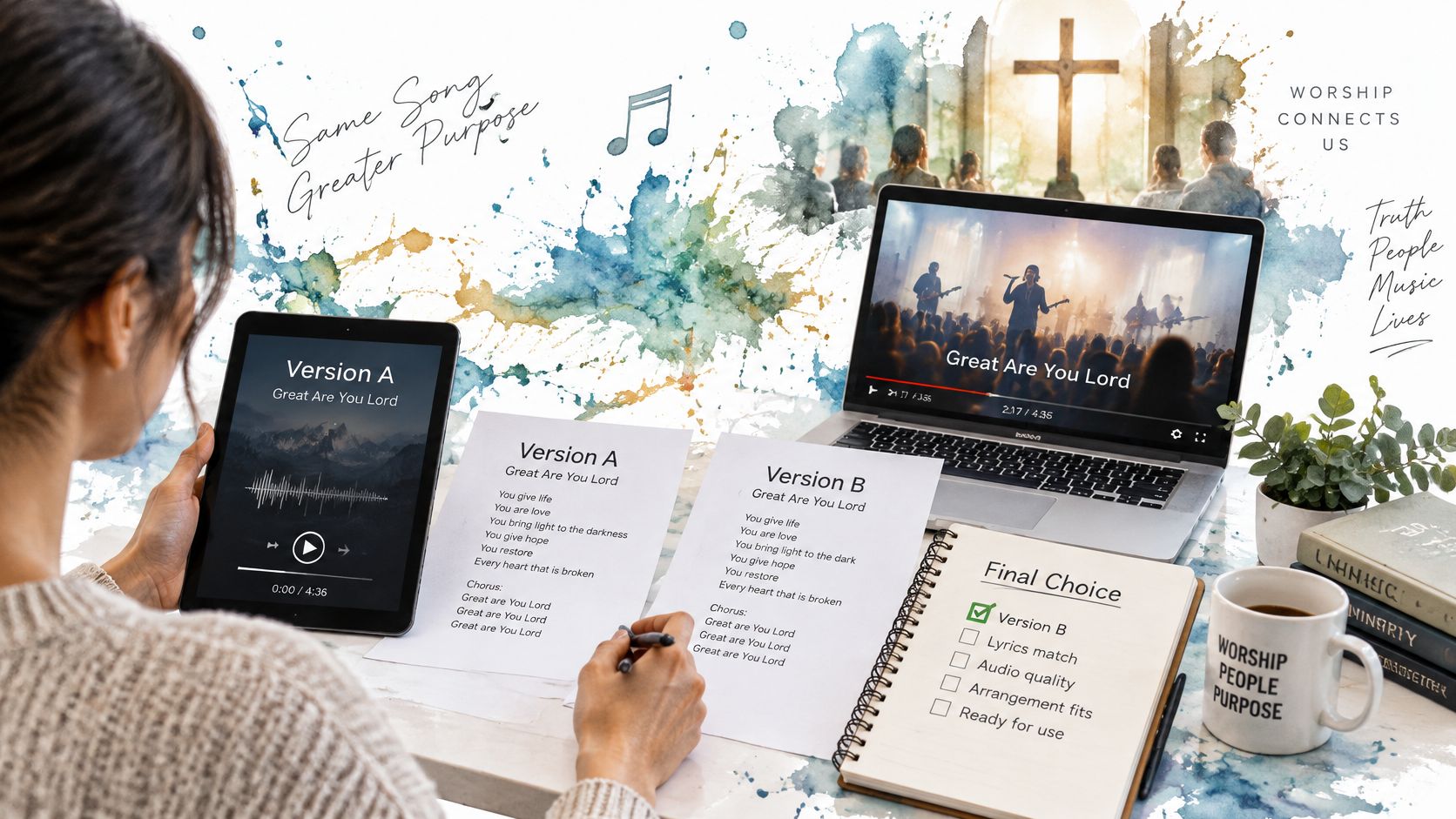
Pick the artist and recording that match your need. Check the refrain against that version, and confirm the writer and copyright line. Then watch the official video for that recording so the audio, lyrics, and credits line up in one place.
Why the Official Video Settles Arguments
A lyric page can be edited by almost anyone, but an official video comes from the artist's own channel or label. When you hear the singer deliver the refrain, you'll know whether your text says what the recording says. Our guide to the official lyrics video explains why pairing approved text with official media makes verification so much easier.
Choir leaders who like learning visually may also enjoy browsing choir apparel videos while planning a service, since seeing garments in motion helps more than a still photo. The same principle applies here. Watching and listening beats guessing from a title.
On House of Lyrics, each song has its own page, separate from other songs by the same artist. That structure suits a title like this one, because each version can carry its own credits instead of being merged into a single confusing entry. We currently have 595 artist pages waiting to be claimed, and claiming a song page is free for the artist or rights holder.
Here's your concrete next step, whichever seat you're in. If you're the artist or rights holder for a version of this song, claim its page so the lyrics and credits stay accurate under your control. If you're a fan or church volunteer, write down the version you chose, with its artist, album, year, and refrain wording, and check its page before you sing or project it.
That's the whole skill. You came looking for a lyric, and you're leaving with a librarian's eye for versions. The next time a title points in five directions, you'll know exactly which details bring it home.
If you're an artist or rights holder for a version of Celebrad a Cristo, claim its free song page so listeners find your approved lyrics, credits, and official video in one place. Fans and church volunteers can browse our library to check the exact version before singing or projecting it. Visit House of Lyrics to claim your page or find your recording today.