Official Lyrics Video: A Complete Guide for Artists and Fans
Learn what an official lyrics video is, how it differs from fan uploads and music videos, and how artists can publish authoritative, accessible lyrics online.
An official lyrics video is published by an artist or rights holder's verified channel, pairing a complete recording with artist-approved on-screen text. In 2014, videos with “lyric video” in their titles collected more than 850 million views, showing how far the format had moved beyond casual fan uploads.
You've probably encountered the problem yourself. You search for a song's words, click the first result, and find a low-resolution reupload with missing lines, incorrect ad-libs, or no clear connection to the artist. Sometimes several versions compete, and none tells you which text is trustworthy.
An official lyrics video solves that uncertainty only when “official” describes more than the channel name. The source should be authorized, the recording should be attributable, and the words should come from an approved lyric record. That combination makes the video useful to fans, artists, labels, translators, journalists, and anyone who needs to know that the words on screen are reliable.
Table of Contents
- What an Official Lyrics Video Actually Is
- How Lyric Videos Became a Global Release Strategy
- Official Lyric Video vs Fan Upload vs Music Video
- Asset Provenance and Rights Metadata Explained
- Accessibility and Synchronized Lyrics as Publishing Requirements
- Why “Official” Must Mean More Than a Channel Name
- How Verified Lyrics and Official Video Embeds Work Together
- Key Takeaways and Frequently Asked Questions
What an Official Lyrics Video Actually Is
An official lyrics video is a video released through an artist, label, or verified rights holder's channel that combines the authorized recording with lyrics approved by the people who control the work. The visual design can be simple or elaborate. Animated typography, album artwork, performance footage, and minimalist text all qualify as possible formats. The defining feature is not visual style. It's authority joined to accurate text.
Three signals help separate an official release from a random upload:
- Channel ownership: The publishing account belongs to the artist, label, distributor, or another authorized rights holder. A fan channel may use the correct artwork and audio while having no authority to represent the release.
- Asset provenance: The recording and video have a traceable source. The page should identify the artist, title, label or rights holder, and canonical video reference rather than hiding behind a vague filename.
- Approved wording: The displayed lyrics come from a text version reviewed by the artist or rights holder. This matters for names, featured artists, repeated phrases, ad-libs, translations, and intentional wording.
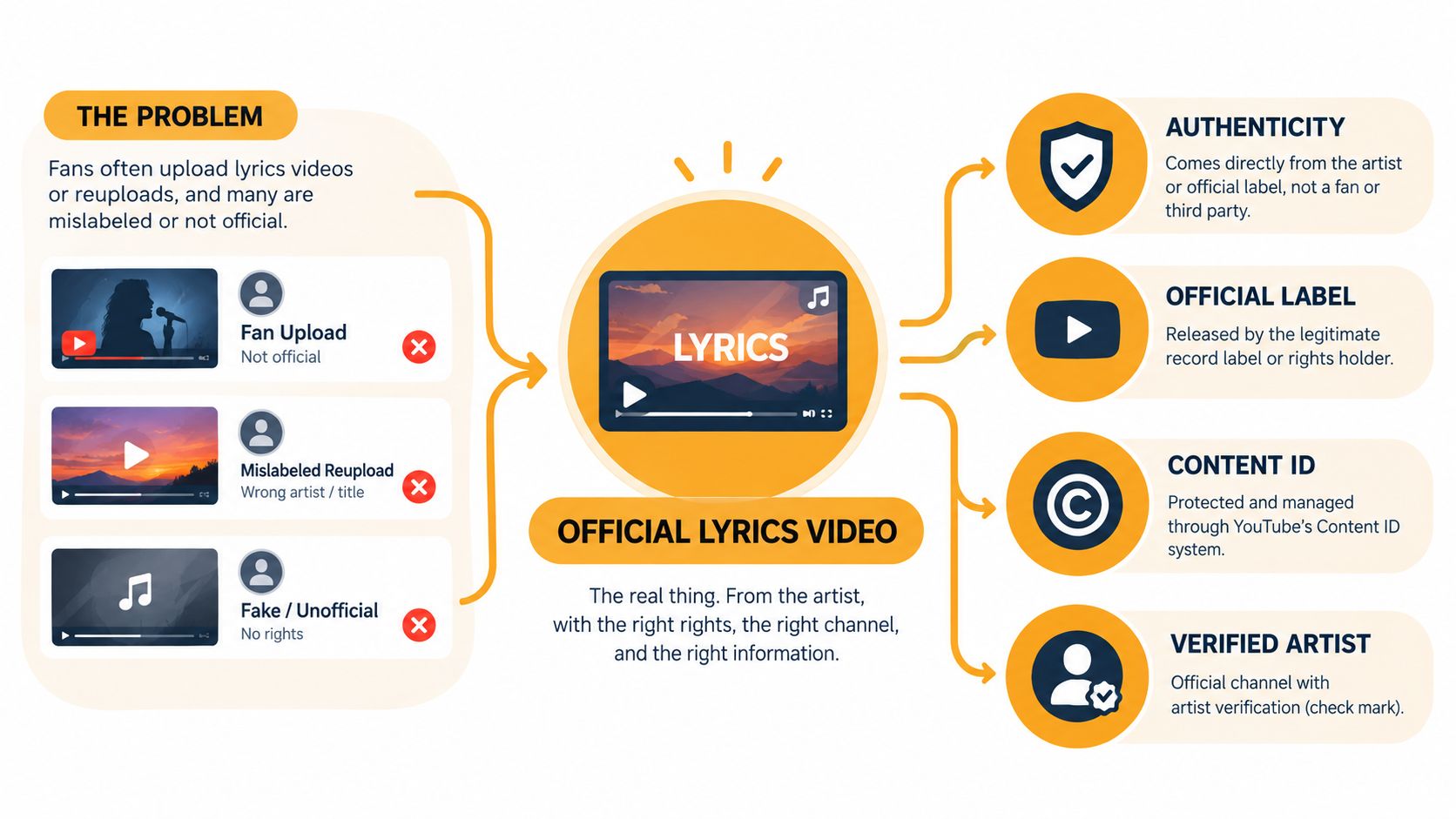
Think of the video as a signed certificate of authenticity. The certificate doesn't need to be visually impressive. It needs to show who issued it, what it covers, and whether the information has been checked. A video on an artist's channel is a strong starting signal, but it isn't the entire certificate. Metadata, rights records, and lyric approval complete the picture.
Practical rule: If you can't identify who authorized the recording and who approved the words, treat the video as unverified, even if it looks professional.
For artists, production therefore starts before animation. Prepare the final audio, approved lyric text, credits, featured-artist names, translations if applicable, and publishing information. Then connect those materials to the exact video that will be embedded elsewhere. Teams working with subtitles delivered on tight deadlines also benefit from keeping the approved text separate from its timed presentation, so speed doesn't replace review.
How Lyric Videos Became a Global Release Strategy
Lyric videos grew from a convenient way to display words into a deliberate release asset during the early 2010s. Labels and artists began publishing them before or alongside conventional music videos, giving listeners a complete song and readable text while a more expensive narrative or performance production was still being prepared.
The scale became visible in a 2014 report based on YouTube data, which said videos containing “lyric video” in their titles had accumulated more than 850 million views during that year, representing roughly 100 days of uploaded video duration. The leading examples included Avicii's “Wake Me Up (Lyric Video)” at approximately 198.5 million views, “Hey Brother (Lyric)” at about 137.1 million, Maroon 5's “Payphone” lyric video at approximately 117.0 million, and Adele's “Skyfall (Lyric Video)” at about 98.4 million. These figures are reported in The Hit Formula's 2014 overview of popular lyric videos.
Those releases also show the format's breadth. Lyric videos appeared across pop, dance, soundtrack, and mainstream album campaigns, rather than remaining a niche fan practice. Their strategic value was straightforward: one asset delivered the full recording, reinforced exact wording, created searchable audiovisual inventory, and held attention before a larger video arrived.
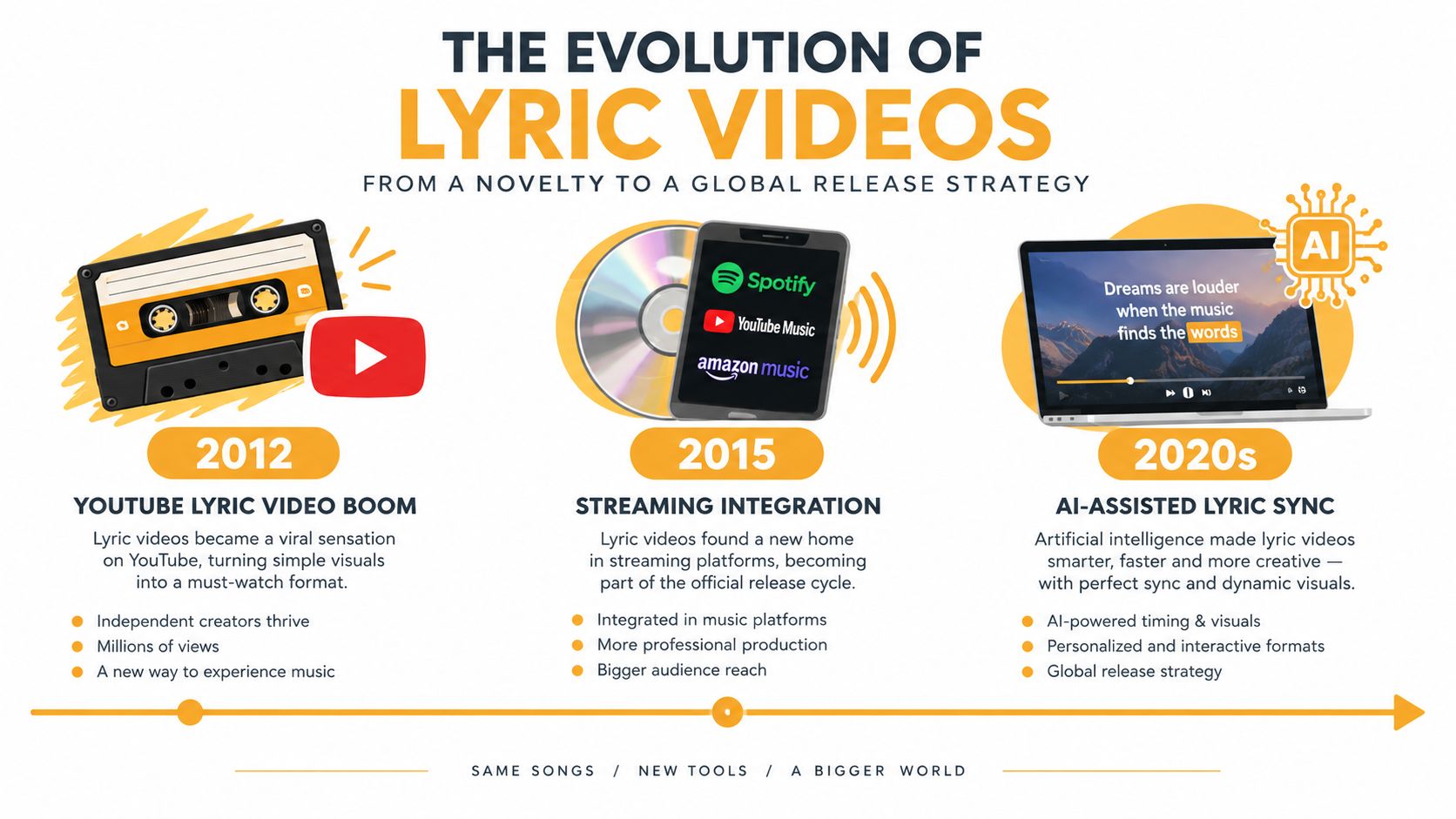
YouTube's role in music discovery explains why this transition mattered. Audience research compiled by Thrive My Way's YouTube statistics overview reports that 64% of YouTube viewers use the service for music-related activity, while approximately 82% of U.S. YouTube users identified listening to music as a reason for using the platform. The same compilation estimated that YouTube represented nearly 47% of global music consumption, although its methodology and definition of “consumption” deserve caution.
The lesson for artists is still relevant in 2026. Short-form clips may introduce a song, but a complete official lyrics video gives listeners a stable place to hear, read, and revisit it. Artists planning the wider campaign can also use practical guidance on how to promote your music, treating the lyric video as part of a connected catalog rather than an isolated upload.
Official Lyric Video vs Fan Upload vs Music Video
People often compare these formats by appearance, but publisher and purpose matter more than animation quality. A fan upload may display the words clearly, while a cinematic music video may contain no lyrics at all. Only one format is designed to place an authoritative recording and readable approved text together.
| Format | Publisher | On-Screen Text | Rights Status | Typical Search Behavior |
|---|---|---|---|---|
| Official lyrics video | Artist, label, distributor, or authorized rights holder | Rights-holder-approved lyrics, usually synchronized to the recording | Authorized asset with identifiable ownership | Can rank as the canonical audiovisual lyric result when title and metadata are accurate |
| Fan upload | Fan or unverified third party | User-transcribed, copied, translated, or edited text | Authorization may be unclear or absent | May appear early because it targets lyric searches or has existed longer |
| Traditional music video | Artist, label, or authorized production partner | Often limited, incidental, or absent lyrics | Authorized audiovisual production | Usually found for the artist and song title, but may not answer a lyric-search need |
A fan upload can appear first even when an official version exists. Search systems respond to many signals, including relevance, wording, engagement, indexing history, and user behavior. That visibility doesn't confirm rights ownership or lyric accuracy. A fan may have typed a chorus correctly, but the same upload may omit a verse, misidentify a featured vocalist, or remain online after the rights holder publishes a corrected version.
A traditional music video has a different job. It tells a visual story, presents a performance, or builds the artist's image. An official lyrics video prioritizes comprehension and repeat listening. It can use album art, kinetic typography, or a visualizer, but the audience should be able to follow the words without guessing whether a dramatic scene contains the lyric text.
The useful distinction is not “official versus creative.” It's “authoritative text versus unverified text.”
For catalog owners, this difference creates a search problem and a trust problem. Searchers want one dependable answer, while rights holders need their canonical recording connected to the correct words. An editorial workflow, such as the one described in what an editorial review involves, can check the text before it becomes part of a public lyric record.
Each format has value. Fan uploads can help people discover obscure songs, music videos can deepen an artist's identity, and official lyrics videos can support accurate sing-along use. The official lyric asset is distinctive because it brings canonical audio, approved words, and attributable ownership into one reference point.
Asset Provenance and Rights Metadata Explained
“Provenance” means where an asset came from and who has authority over it. For an official lyrics video, that record should be clear even when the viewer only sees a thumbnail, title, and play button.
YouTube's Content ID workflow distinguishes several asset categories, including music-video, sound-recording, composition-share, and art-track assets. Each asset is connected to reference media and ownership metadata. When an uploaded video matches that reference material, the rights holder can apply a policy such as monetizing, blocking, or tracking the use, subject to the relevant rights and territories. YouTube's Content ID asset guidance also requires territory information, so authorization shouldn't be treated as automatically global.
That distinction matters because a single song can involve several rights relationships. The sound recording may belong to one party, the composition may involve writers and publishers, and the music video may have its own ownership record. Calling everything “the song” hides the details a catalog system needs to preserve.
A practical asset record
Artists and managers don't need to turn every upload into a legal seminar. They do need a consistent record for every official embed. At minimum, store:
- Title and artist: Use the release name and credited artist exactly.
- Label or rights-holder identity: Record who authorized the video or controls the relevant asset.
- Source-channel identity: Save the official channel and the exact canonical video reference.
- Ownership territory: Note where the recorded ownership applies instead of assuming every territory follows the same rule.
- Verification status: Mark whether the asset has been checked, approved, or requires follow-up.
YouTube's minimum metadata guidance requires a music-video asset to include title, artist, and record label. Composition assets require title and writer. That makes labels such as “Track 4” poor catalog data, even if an internal team understands what they mean.
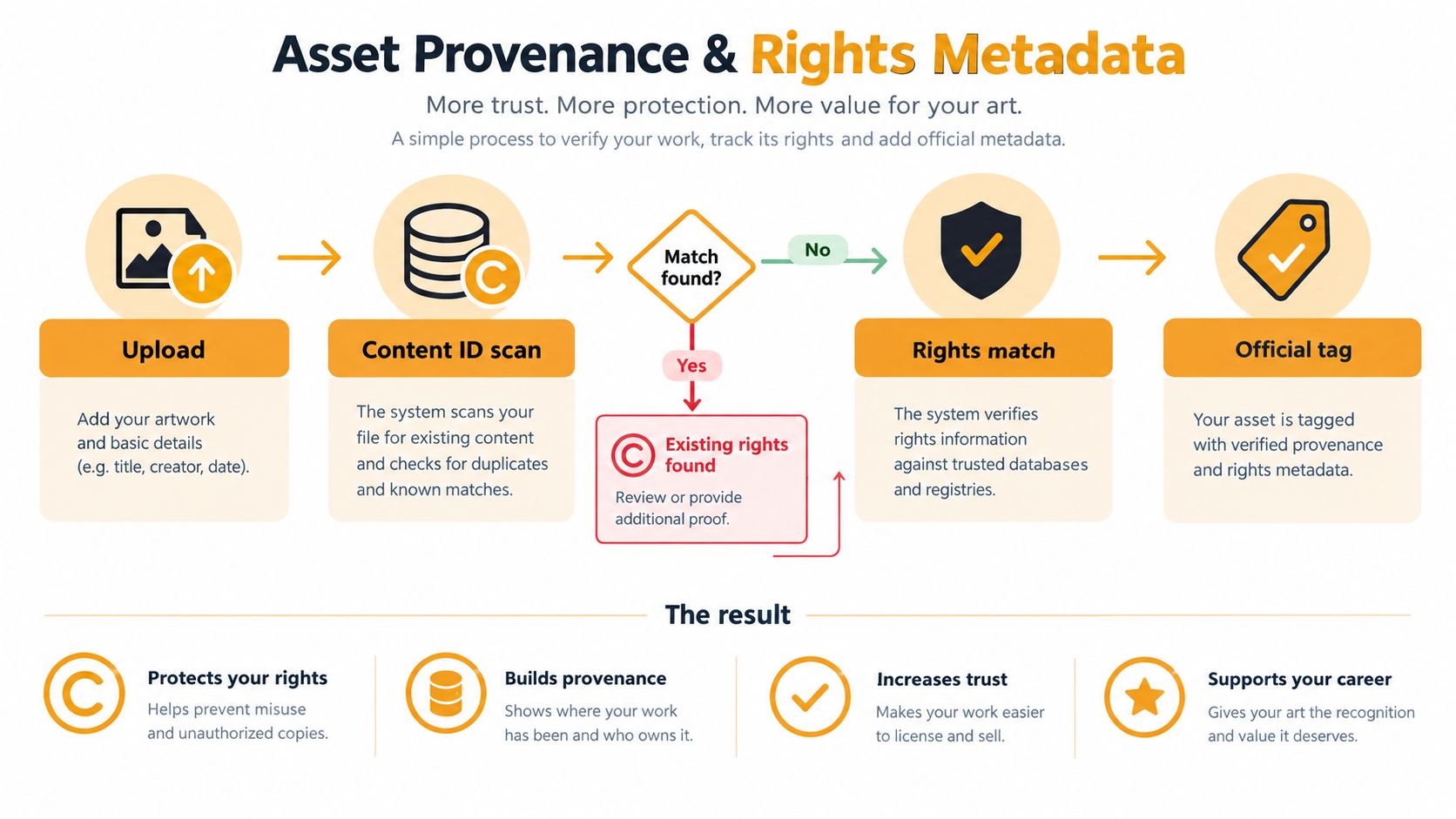
A structured provenance record helps a team answer ordinary operational questions quickly. Which version should be embedded? Who approved it? Does the video apply in this territory? Where should a rights dispute go? Good metadata management turns those questions into fields instead of detective work.
The benefit is not just defensive. Accurate metadata helps fans distinguish an artist-approved release from a reupload, helps publishers connect composition information, and gives editors a reliable source for future corrections. The visible video may look simple, but its trustworthiness depends on the record behind it.
Accessibility and Synchronized Lyrics as Publishing Requirements
A lyric video isn't only decorative text moving over music. It's a timed media experience, so the words need to remain readable, synchronized, and available in a form that doesn't depend entirely on playback.
The W3C guidance on captions for prerecorded synchronized media says captions should communicate dialogue, speaker identity, and meaningful non-speech audio. For a song, that can include vocal distinctions, relevant sound context, and other information a viewer needs to understand what they're hearing. A separate transcript is also valuable because captions support simultaneous viewing, while a transcript provides an independently navigable text version.
Separate the words from the timing
Store each lyric line or phrase as a timestamped cue with a start and end time. Keep the authoritative text in its own record, then connect that text to presentation timing. This lets an editor fix a cue that appears too early without changing the approved spelling, punctuation, or wording.
Where a track has multiple vocalists or clearly distinct parts, labels can help. A format might identify a featured vocalist, backing vocal, spoken passage, or translated segment. The exact presentation should suit the song, but the principle is stable: viewers shouldn't have to guess who is singing when that distinction carries meaning.
A publication check should cover:
- Readable contrast and placement: Text must remain legible against artwork, animation, and changing backgrounds.
- Accurate synchronization: Lines should appear close enough to the vocal delivery to support reading and singing along.
- Text alternative: Provide a page-level or downloadable transcript that remains usable when video playback fails.
- Approval review: Compare the displayed words with the artist-approved lyric record before publication.
Timing errors can frustrate fans even when every word is technically correct. Conversely, perfect timing can't rescue a text record that misnames a featured artist or invents a line. Teams exploring difficult audiovisual synchronization can also see how Synchronicity Labs handles dubbing, though lyric publication still requires its own text approval process.
Accessibility improves the basic fan experience while also making the content more durable. A transcript can support muted viewing, assistive technology, translation workflows, press use, and future catalog maintenance. Treating it as part of publishing quality, rather than an optional add-on, gives the official lyrics video a stronger foundation.
Why “Official” Must Mean More Than a Channel Name
A verified channel establishes who published a video. It doesn't automatically prove that every word on screen has been checked. An artist or label might upload a lyric video using a draft supplied by a contractor, an old demo transcription, or a translation that no one with authority reviewed.
That distinction becomes visible in the details fans notice first. Is the featured artist named correctly? Are ad-libs included or intentionally omitted? Does a repeated phrase use the approved spelling? If the song mixes languages, did the translation preserve the intended meaning? A channel label can't answer those questions by itself.
A reliability standard for text
Treat “official” as a maintenance promise. The rights holder should know which lyric version is approved, who verified it, and how a correction will reach the public. This is especially important for independent and multilingual catalogs, where several conflicting versions may circulate without an obvious authority.
A dependable standard includes four signals:
- Approved text version: The artist or rights holder has reviewed the exact words used in the video or associated lyric page.
- Visible attribution: The page identifies the artist, rights holder, writers, featured contributors, or other relevant credits.
- Canonical media: The embedded video points to the recognized official source, not a downloaded copy or third-party reupload.
- Correction path: Someone with authority can amend the lyric record and document why the change was made.
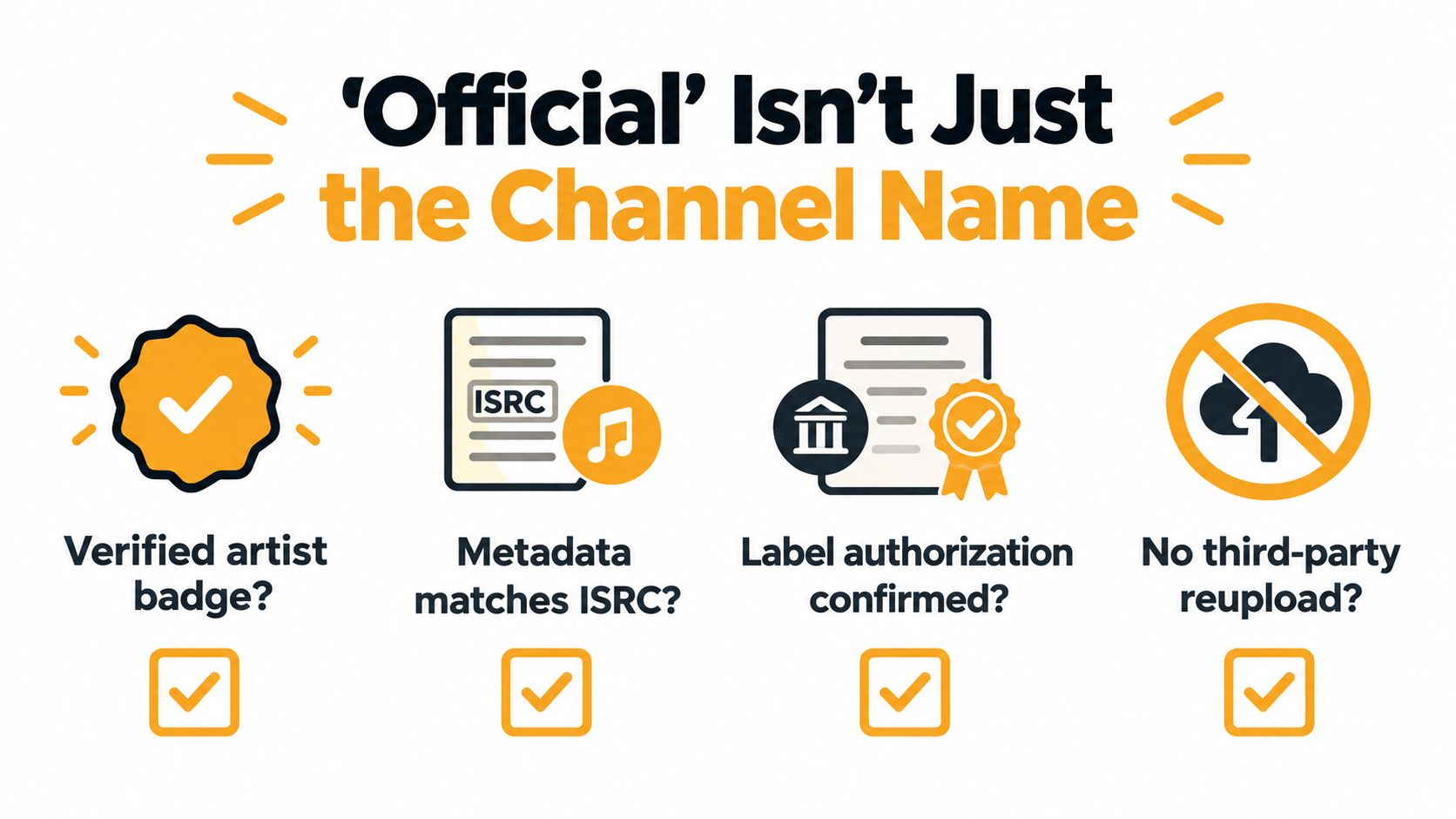
This approach also protects fans from a subtle form of confusion. A polished video can be unofficial, while an official upload can still contain an unreviewed mistake. The answer isn't to reject the channel signal. It's to combine channel authority with editorial evidence and a record that can be maintained.
“Official” should tell the listener not only who published the video, but also how confidently they can rely on its words.
Artists can apply the same test to lyric pages, press kits, and catalog databases. A page such as the “All This Time” lyrics reference is most useful when its text, attribution, and media source point to the same controlled version. That alignment turns a lyric page from a disposable search result into a dependable catalog reference.
How Verified Lyrics and Official Video Embeds Work Together
The strongest lyric experience separates two jobs and connects them carefully. The lyric record provides the approved words, credits, and searchable text. The official video provides the audiovisual performance and synchronized presentation. Linking them lets a fan read the song even when playback is inconvenient, then watch the canonical video when they want the full media experience.
A platform such as House of Lyrics can organize that connection through a simple operational flow:
- The artist or rights holder claims the relevant artist, album, or song page.
- Ownership is verified through a one-time code placed in an X or SoundCloud bio.
- The owner enters lyrics, credits, metadata, and the official video reference in an editor.
- Changes remain held for review before appearing publicly.
- The published page displays the approved text alongside the official video embed and visible attribution.
This structure addresses the fragmentation fans encounter in ordinary searches. Instead of treating an isolated video, a lyric transcription, and an artist profile as unrelated items, it connects them as parts of one catalog. A visitor can move from artist to album to song, while the rights holder retains control over the information that represents the release.
The editorial hold also matters. It creates a pause between contribution and publication, giving someone a chance to check spelling, credits, featured artists, translation, timing references, and the selected video source. That process is different from relying on a user's confidence or an automatically generated transcription.
For an independent artist, the practical starting point is a clean source folder containing the final lyric text, approved credits, canonical video URL, rights-holder details, and correction notes. The artist can then claim a House of Lyrics page and maintain those materials through a controlled workflow. For fans, a verified page signals that the content has an identifiable owner and an editorial path, not merely that someone uploaded a video with the right title.
Key Takeaways and Frequently Asked Questions
An official lyrics video is a reliability standard, not just a label attached to a YouTube upload. Look for an authorized channel, traceable asset ownership, approved wording, accurate metadata, synchronized presentation, and a correction path.
How should an artist correct lyrics after release? Update the authoritative text record, review the changed cues or transcript, and replace or annotate the affected video and page where possible.
Is a lyric video enough for catalog visibility? No. It supports audiovisual discovery, but a separate searchable lyric page and transcript can serve listeners when video playback is unavailable.
What happens if the official video disappears? Preserve the approved lyric record and provenance details, then update the canonical embed when the rights holder publishes a replacement.
House of Lyrics lets verified artists and rights holders manage artist, album, and song pages, pair approved lyrics with official video embeds, and submit updates through an editorial review workflow. Visit House of Lyrics to connect your catalog's authoritative words and audiovisual sources in one discoverable place.