Happy Day Lyrics: Find the Right Song Fast
Looking for Happy Day lyrics? Compare Tim Hughes, Jesus Culture, Edwin Hawkins and more with verified lyrics, credits, and official videos.

Which “Happy Day” lyrics are you looking for: a gospel choir's joyful refrain, a congregational worship song, or an entirely different track? The title alone won't identify the words. Start with the artist and the recording, then check the lyric text against that specific version.
That's the difference between a useful lyrics reference and a page that guesses. A reliable entry should show clear performer and songwriting credits, identify the recording, and connect listeners to an official audiovisual source when one's available. For a practical approach to checking a song's identity before reading its words, see this guide to finding song lyrics.
Table of Contents
- Why Happy Day Lyrics Need a Version Selector First
- Quick Comparison of the Most Searched Happy Day Recordings
- Oh Happy Day by the Edwin Hawkins Singers
- Happy Day by Tim Hughes
- Jesus Culture Happy Day Featuring Kim Walker-Smith
- Other Happy Day Recordings Worth Knowing
- How House of Lyrics Handles Version Control
- Why Identification Comes Before the Lyric Text
- How to Claim a Happy Day Song Page on House of Lyrics
- One Screen Decision Card
- Happy Day Lyrics FAQs
Why Happy Day Lyrics Need a Version Selector First
The search phrase “Happy Day lyrics” describes a title, not a single song. Results can include the Edwin Hawkins Singers' gospel recording, Tim Hughes's worship song, Jesus Culture's live performance featuring Kim Walker-Smith, and unrelated tracks by Talking Heads and Blink. If you open the first result without checking its artist, you can land on words that have nothing to do with the song in your head.
Use this simple identification path:
- Name the artist you remember. “Happy Day” by Tim Hughes and “Oh Happy Day” by the Edwin Hawkins Singers point to different compositions and recordings.
- Match a lyric opening or musical cue. A distinctive first line, a choir response, or a live lead vocal can narrow the choice quickly.
- Confirm the release context. A studio recording and a live performance may share a composition while differing in credits, arrangement, and vocal details.
Catalog rule: Identify the recording before you trust the transcription.
A good reference page should make that decision easy. It should label the performer and release, keep composition and recording credits distinct, and connect the lyrics to the exact version they describe. Artist-approved text and an official video embed help readers check that the words belong to the performance they're trying to find.
The aim isn't to make you work harder before reading lyrics. It's to prevent a familiar title from sending you to the wrong song.
Quick Comparison of the Most Searched Happy Day Recordings
Use the artist and the sound you remember as your first filters. The table separates the best-known gospel and worship entries from unrelated songs that happen to share the title. When a lyric opening isn't confirmed by the available reference material, it's marked accordingly rather than guessed.
Happy Day Recordings Side by Side
| Recording | Artist | Year | Genre | Opening Line |
|---|---|---|---|---|
| “Oh Happy Day” | Edwin Hawkins Singers | 1969 single | Gospel | “Oh happy day” |
| “Happy Day” | Tim Hughes | Not confirmed here | Christian worship | Opening line not confirmed here |
| “Happy Day” live version featuring Kim Walker-Smith | Jesus Culture | Not confirmed here | Live Christian worship | Shares the Tim Hughes song; check the performance entry for its exact opening |
| “Happy Day” | Talking Heads | 1977 | Rock | Opening line not confirmed here |
| “Happy Day” | Blink | Not confirmed here | Not confirmed here | Opening line not confirmed here |
Start with the sound, then verify the words. If you remember a choir-led gospel refrain, the Edwin Hawkins Singers entry is the likely match. If you remember a contemporary worship song, compare the Tim Hughes original with the Jesus Culture live performance. They're connected, but the performer and recording context aren't interchangeable.
For Talking Heads or Blink, the shared title isn't enough to establish a connection to either gospel or worship. Look for the artist name and the specific release before using a lyric page. Where an opening line hasn't been independently confirmed, don't treat a guessed lyric as an identification clue.
Oh Happy Day by the Edwin Hawkins Singers
The Edwin Hawkins Singers' “Oh Happy Day” is a landmark example of gospel reaching a broad popular audience. The recording was made in 1968 at Oakland's Ephesians Church of God in Christ and released as a single in 1969. Hawkins's arrangement drew on an older gospel hymn, reshaping the material around choir-led call-and-response, a piano-centered groove, and a featured lead vocal. The Library of Congress essay on Edwin Hawkins offers useful context for understanding why the hymn source, arrangement, and recording should be credited separately.
The single reached No. 4 on the Billboard Hot 100 and No. 2 on the R&B singles chart. It reached No. 1 in France, Germany, and the Netherlands, and peaked at No. 2 in Canada, the United Kingdom, and Ireland. It also won the 1970 Grammy Award for Best Soul Gospel Performance; historical accounts report worldwide sales exceeding 7 million copies. These details are documented in the song's historical overview.

The UK chart record shows the single spending 5 weeks in the Top 10, 8 weeks in the Top 20, and 13 weeks in the Top 75 in its original run. Decades later, the song returned to the top of Billboard's Gospel Digital Song Sales chart in January 2018, after Hawkins's death. The same historical account notes retrospective recognition by the Recording Industry Association of America. The song's chart and later history helps explain why it remains a reference point, rather than merely a memory of one chart moment.
For the lyrics, use the text attached to the Edwin Hawkins Singers' 1969 single. Don't substitute an unverified hymn transcription or a later performance and assume every word, repetition, or response matches. The arrangement and performance shape what listeners hear.
Credits to keep distinct: the older hymn is the source material; Edwin Hawkins is credited with the modern arrangement; the Edwin Hawkins Singers are the recording artist. The recording also features a lead vocalist. A careful entry should name that vocalist only when the credit has been verified for the specific release.
Happy Day by Tim Hughes
Tim Hughes's “Happy Day” is a Christian worship song, not another name for the Edwin Hawkins Singers' gospel recording. The available reference material identifies its worship context and points to songwriting and release details, but it doesn't establish a verified full lyric transcription here. That distinction matters: publishing a guessed lyric block would make the page look complete while giving singers and readers no reliable basis for trusting the words.
The song's themes have been described as resurrection, personal conversion, communal singing, and future hope. Those motifs give listeners a useful way to understand its worship character without claiming a single definitive interpretation. In congregational use, the shared singing is part of the song's setting; an editorial note should describe that context plainly, not present commentary as if it were part of the lyric itself.
A proper entry should keep the songwriter credit separate from the performing artist and the recording's release details. It should also identify whether a displayed transcription belongs to a studio version, a later performance, or another release. If the source text hasn't been confirmed for the exact recording, the responsible choice is to say so and direct readers to a verified version, not fill the gap with a lyric assembled from memory.
That standard is especially important for worship songs, which may circulate in multiple performances and arrangements. The lyric page should make its recording identity visible before presenting the words. Readers can then tell what they're singing, who wrote the song, and which artist's performance they're hearing.
Jesus Culture Happy Day Featuring Kim Walker-Smith
The Jesus Culture version featuring Kim Walker-Smith is a live performance of the Tim Hughes composition, not a separate song just because it has its own recording and performance identity. The composition credit follows the song; the performer and album credits belong to the particular Jesus Culture release. That separation prevents a common catalog mix-up: assigning the live recording's vocalist to the underlying songwriting credit.
The live context matters when matching lyrics. A performer may repeat a line, hold a phrase, or add vocal ad-libs that don't appear in the studio version's lyric display. Those differences are performance details, not proof that the song's underlying composition has changed. A transcription should say which recording it follows and mark any performance-specific variation clearly.
For the base composition's text, use the Tim Hughes entry as the reference point. For a listener trying to identify the specific performance, check a Jesus Culture page that names Kim Walker-Smith and identifies the live release. The two records belong in linked entries, not merged into one page with an ambiguous artist label.
A clean catalog answers two different questions: Who wrote this song? and Who performs this recording? Keeping those answers visible lets a fan find the live performance without mistaking it for the original studio version.
Other Happy Day Recordings Worth Knowing
Some searches lead nowhere near gospel or contemporary worship. The title can point to unrelated catalog entries, so check the artist before comparing lyric text.
- Talking Heads: The comparison table identifies a “Happy Day” track associated with the band and dated 1977. Treat it as a separate rock entry, not as a variation of either gospel or worship song.
- Blink: A “Happy Day” recording is also listed under Blink. The available references don't confirm a release year, genre, or opening lyric line, so don't rely on those details without a release-specific source.
- International titles and versions: A translated title, cover, or regional release can complicate a search further. Match the performer and release metadata before deciding two entries share the same lyrics.
If you're checking another memorable title as well, this reference to “Did You Feel the Mountains Tremble” lyrics shows why matching a phrase to the right artist matters. For “Happy Day,” the same habit is more than a convenience. It's the difference between finding the song you mean and landing on a different composition with a familiar title.
How House of Lyrics Handles Version Control
A dependable catalog treats a song's source, arrangement, recording, and performers as related but separate facts. “Oh Happy Day” makes the distinction clear: an older hymn provides the source, Hawkins created the best-known modern arrangement, the choir recorded a specific performance, and later artists may record their own versions. A lyric page that merges those layers can misstate authorship or attach words to the wrong recording.
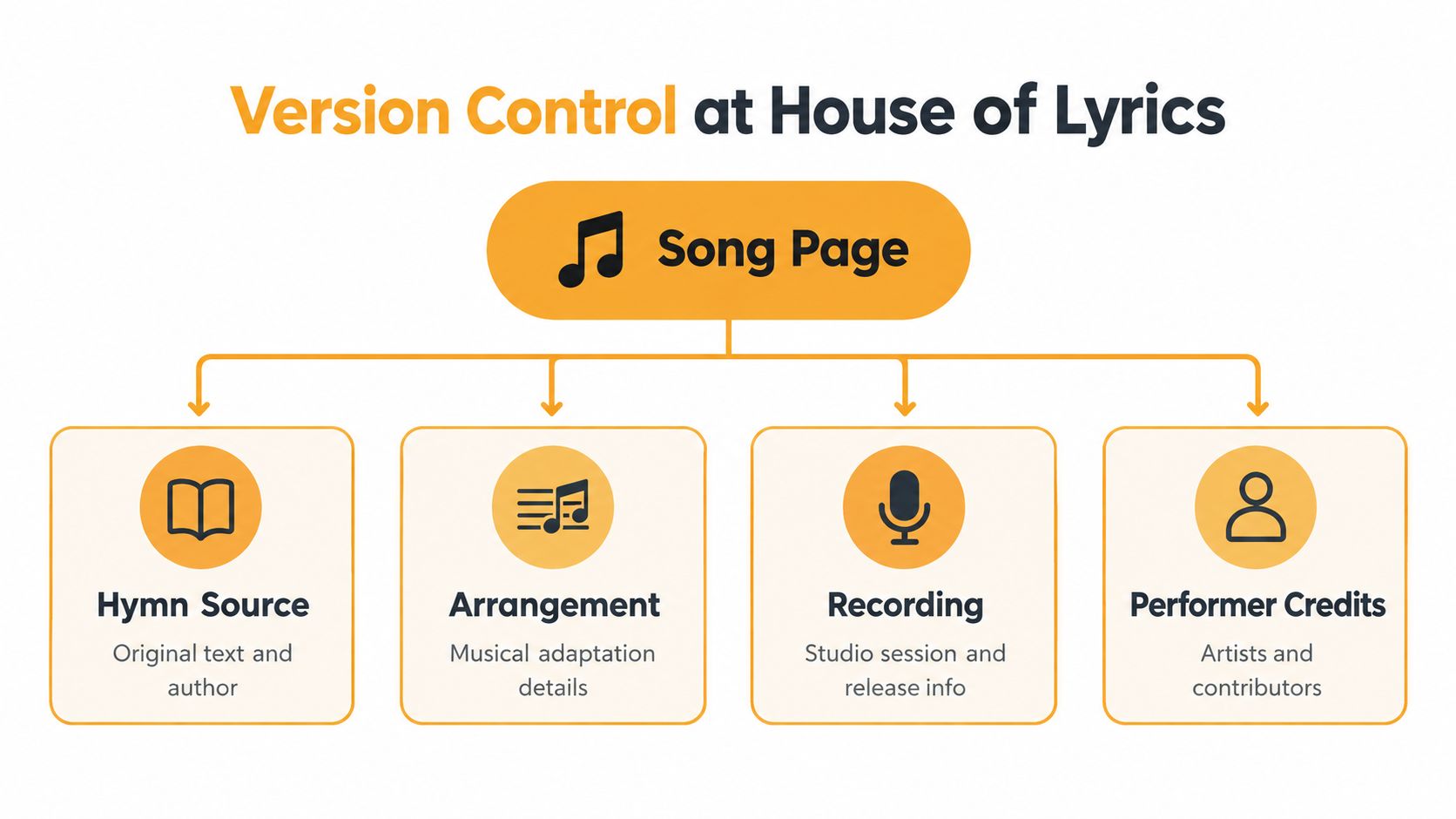
An artist-run library such as House of Lyrics structures claimable artist, album, and song pages, and lets verified artists and rights holders manage lyrics, credits, and metadata. Its verification process uses a one-time code placed in an X or SoundCloud bio, and an editorial review holds changes before publication. The platform also pairs song pages with official video embeds, so readers can compare the text with an authoritative audiovisual source.
For writers and musicians developing original work, songwriting tips for beginners can help with the craft side. Catalog accuracy requires a different discipline: label the source, arrangement, recording, and performers instead of compressing them into a single credit line. Readers looking for a comparable worship-song reference can also visit the page for “I Love Your Presence” lyrics.
Why Identification Comes Before the Lyric Text
Could a polished lyric sheet still send a choir singing the wrong song? Yes. The problem starts when a shared title is treated as a unique identity. Entity resolution means connecting the title to the intended composition and recording, so the words and credits belong to the right entry.
A church team could print a lyric sheet for one “Happy Day” recording, then discover during rehearsal that its phrasing does not match the version chosen for the service. That is more than a catalog error. It wastes preparation time and leaves singers unsure which text to follow. A clear page should make the intended recording unmistakable before anyone copies or performs its words.
The same standard helps readers exploring fresh ways to find new music. Discovery may lead to a familiar title, but the lyric page still needs to connect that title to the right song and recording.
Shared titles create the same issue elsewhere. A page for “Cats and Dogs” lyrics should tie its text to an identifiable version, too. Clear identity gives readers and performers confidence that the lyrics belong to the music they mean.
How to Claim a Happy Day Song Page on House of Lyrics
Artists, managers, and rights holders can begin by claiming the artist page, then adding the song as a linked entry and attaching the correct album information. Keep composition, performance, and arrangement credits separate from the start. That makes later updates easier to verify and helps listeners understand the relationship between versions.
The claim process asks the page owner to place a one-time verification code in an X or SoundCloud bio to confirm control of the page. Once verified, the owner can use the full-page editor to add lyrics, credits, and metadata. Changes go through review before they appear publicly, so the published entry isn't an unvetted submission.
Add an official video embed for the exact recording when one is available. It gives readers a direct audiovisual reference for checking the lyric text and the performance they're looking for. Before submitting, confirm that songwriter, performer, featured artist, and arranger credits are attached to the right roles.
Artists and verified rights holders can start the House of Lyrics page-claim process. The best submission is precise: one identifiable song, the right recording and release details, artist-approved words, and visible credits that don't confuse authorship with performance.
One Screen Decision Card
Before opening a lyric page, make the recording prove it belongs to the song you remember.
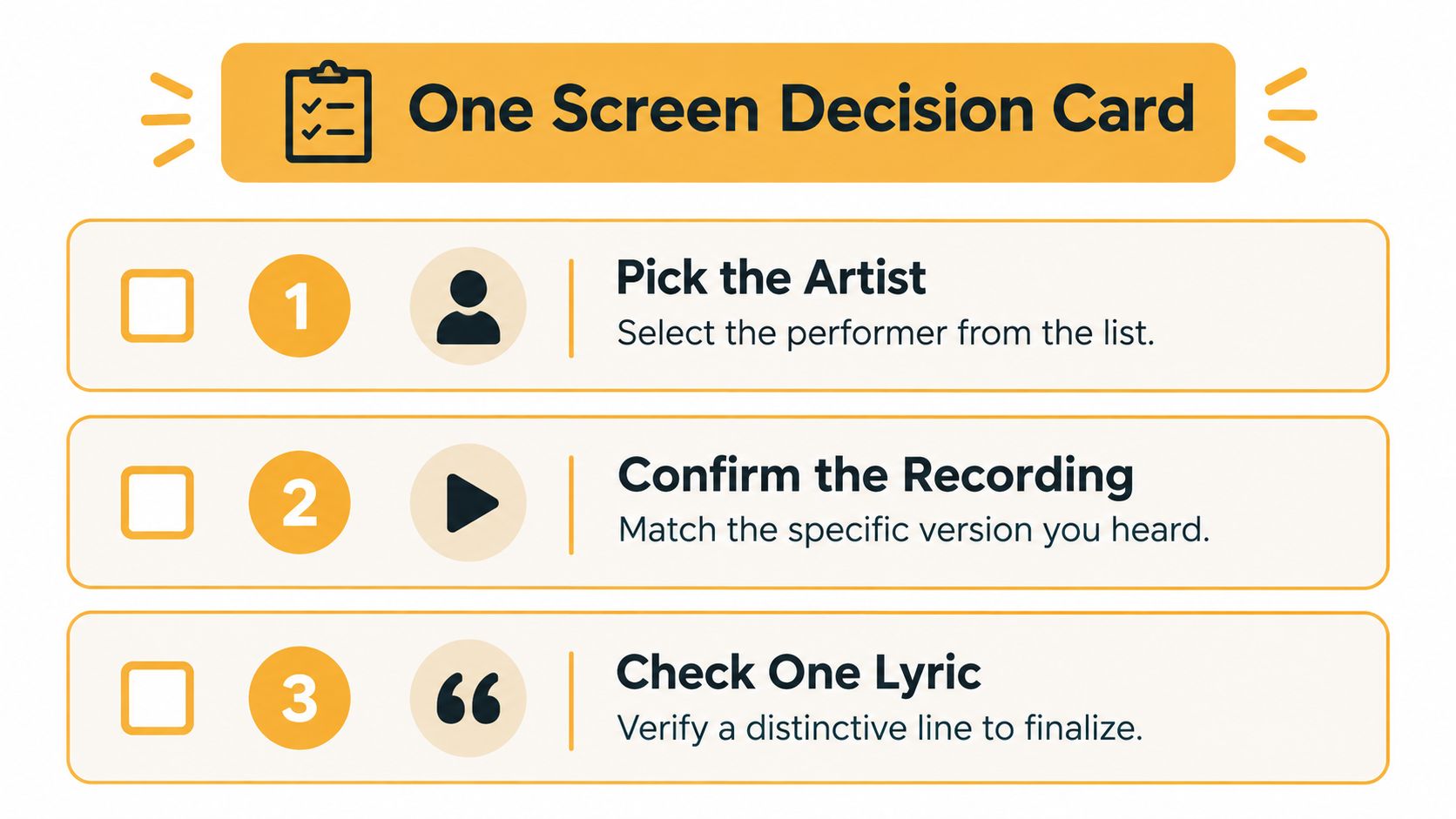
- Pick the artist. Edwin Hawkins Singers, Tim Hughes, Jesus Culture, Talking Heads, or Blink?
- Confirm the recording. Is it the studio version, a live performance, or a different release?
- Check one lyric. Match a distinctive line against the entry for that recording.
For the gospel choir, go to the Edwin Hawkins Singers entry. For the worship composition, start with Tim Hughes; if you mean the live performance featuring Kim Walker-Smith, use the Jesus Culture entry and keep its recording credits distinct. If neither matches, return to the comparison table and confirm the artist before trusting a transcription.
Happy Day Lyrics FAQs
Which “Happy Day” song do I mean?
Start with the artist you remember, then confirm the recording using a distinctive lyric or performance detail. The comparison table separates the gospel, worship, and unrelated entries.
Do Tim Hughes and Jesus Culture use the same lyrics?
The Jesus Culture performance featuring Kim Walker-Smith is a live performance of the Tim Hughes composition. The performance may include repetitions or ad-libs, so check the specific recording rather than assuming every sung detail matches a studio transcription.
How can I tell a cover from a live recording?
Check the composition credit, performer, and release context. A cover can be a new recording of an existing song; a live version identifies a particular performance and release. The two descriptions answer different catalog questions.
Where should I look for an official video?
Use the matching song page and confirm that its embed belongs to the recording you identified. Don't treat an unofficial upload or a video of another version as confirmation of the lyric text.
House of Lyrics pairs artist-approved lyrics with visible credits and official video embeds, with artist and rights-holder pages linked to their songs and releases. If you manage a “Happy Day” recording, claim the correct page and keep its words tied to the exact version; if you're searching as a listener, visit House of Lyrics to browse its artist and song catalog.