One Small Voice Lyrics: Official Versions and Full Guide
Find the verified One Small Voice lyrics by Carole King and Sesame Street. Explore full credits, metadata, and official video embeds in this guide.
“One Small Voice” refers to at least two distinct songs, primarily Carole King's 1983 track and Jeffrey A. Moss's 1989 Sesame Street song. Check the artist, writer, and album before you use any lyrics, because the identical title can lead you to the wrong recording.
You've probably experienced the confusion already. You search for “one small voice lyrics,” open a promising result, and discover that the words don't match the melody you remember. One page points toward a reflective Carole King recording, another suggests a children's song associated with Sesame Street, and a third may mention a completely different artist.
The title is the problem, not your memory. The most useful way to search is to identify the recording first, then verify its credits and release context. This guide keeps the major versions separate so you can recognize the song you want before reading, quoting, performing, or publishing any lyrics.
Table of Contents
- "Understanding the One Small Voice Lyric Ambiguity"
- "Carole King One Small Voice Origins"
- "One Small Voice Lyrics Carole King Version"
- "Sesame Street One Small Voice Background"
- "One Small Voice Lyrics Sesame Street Version"
- "Why Music Metadata Matters for Lyric Accuracy"
- "Comparing Official Lyrics Platforms and Sources"
- "How to Find the Correct One Small Voice Version"
- "Using Verified Lyrics Responsibly"
- "Quick Reference for One Small Voice Lyrics"
"Understanding the One Small Voice Lyric Ambiguity"
The phrase “One Small Voice” doesn't identify one unique song. Carole King wrote and first released her version in 1982, and it later appeared on her 1983 album Speeding Time. Jeffrey A. Moss wrote a separate Sesame Street version that was released in 1989, creating two major reference points with the same title but different writers, performers, audiences, and musical settings.
A third track by Libera adds another layer of confusion. The title therefore works more like a search phrase than a unique catalog identifier. The Carole King track listing helps anchor King's recording to its album, while platform metadata can point listeners toward the Sesame Street release instead.
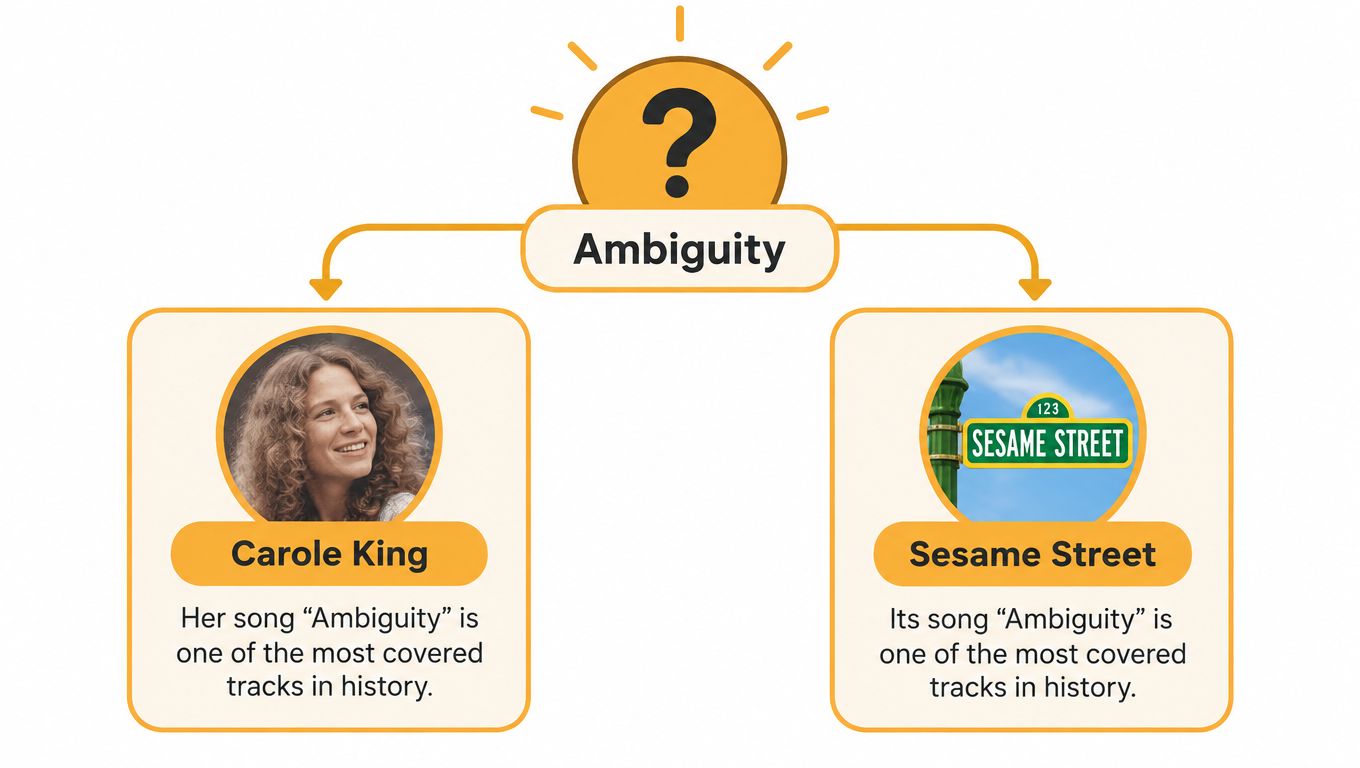
The two primary search paths
| If you remember... | You probably want... | Verify with... |
|---|---|---|
| A singer-songwriter, piano-led arrangement, and civic or truth-telling themes | Carole King | Speeding Time, Carole King, and the King writing credit |
| Children's voices, Sesame Street, or an encouraging group performance | Jeffrey A. Moss's Sesame Street song | Songs From The Street, Sesame Street, or the credited performer |
Search results often blend these paths because search engines match words, titles, and partial metadata. A useful comparison is the way a catalog can confuse similarly named works, much like readers sorting out different “Cats and Dogs” lyrics. The title alone isn't enough. Artist, writer, album, and recording context are the clues that turn a vague result into the right entry.
"Carole King One Small Voice Origins"
Carole King's recording has a clear place in her catalog. She wrote and first released “One Small Voice” in 1982, and the song later appeared on her 1983 album Speeding Time. That placement matters because many lyric pages omit the album context, making it harder to distinguish King's song from the later Sesame Street composition.
King later revisited the recording. In a widely reported account, she said she re-recorded it more than two decades later because she wanted to remove the dated synthesizer sound. The song resurfaced publicly after the 2017 Women's March, when its message about the strength of collective action found a new setting. Rolling Stone's account of King's revisit documents that background.

From one singer to a group
The story became especially tangible in Stanley, Idaho, on January 21, 2017. King linked the song's central idea to a gathering in which 29 people joined her, a moment that showed how a single voice can become a shared act. The significance isn't just the size of the gathering. It's the connection between the song's intimate premise and a public expression of solidarity.
King's version is therefore best understood through its singer-songwriter origin, its album history, and its later public reappearance. Those details also provide practical identification cues. If the page you're viewing names Sesame Street or Jeffrey A. Moss, you aren't looking at King's composition.
The recording itself is available in the context of the following official video embed:
"One Small Voice Lyrics Carole King Version"
The Carole King version belongs to King's Speeding Time catalog, not to Sesame Street. Its credited writer is Carole King, and its lyrical perspective centers on the moral weight of speaking out when silence or public agreement feels easier.
I can't reproduce the complete copyrighted lyrics here. For study or performance preparation, use a licensed lyric service or an artist-authorized catalog, then confirm that the entry names Carole King and Speeding Time. Avoid copying a page that lists only the title without a performer, writer, album, or rights information.
How to identify King's text
Look for these signals before trusting a lyric entry:
- Artist credit: The page should identify Carole King as the artist or recording artist.
- Writer credit: The composition should identify Carole King as the writer.
- Album context: The recording should connect to Speeding Time.
- Musical setting: Search previews may mention the singer-songwriter recording rather than children's programming.
- Formatting quality: Line breaks and punctuation should appear deliberate, not like a block of words copied from an unknown source.
The structure of the lyrics matters. A line break can distinguish a repeated refrain from a verse, while punctuation can show whether a phrase is sung as a question, an answer, or a separate statement. Industry metadata guidance treats lyric text as structured catalog information, not merely decorative text. The ISMIR paper on music information retrieval describes lyric-related metadata alongside translated and synchronized lyrics, reinforcing why clean formatting improves search, display, and accessibility.
Practical rule: Identify the recording before you evaluate the words. A beautifully formatted lyric page can still be the wrong song.
"Sesame Street One Small Voice Background"
Jeffrey A. Moss wrote a separate “One Small Voice” for Sesame Street. The song was released in 1989 on Songs From The Street: 35 Years Of Music, placing it in a children's music catalog with broad, long-running international recognition.
This version has a different creative origin from King's track. It was written for a children's television environment, where songs often introduce ideas such as participation, encouragement, imagination, and shared discovery through memorable group performances. Its title sounds similar to King's, but the surrounding catalog tells a different story.
Why platform records can confuse listeners
Apple Music metadata connects the title with Sesame Street: Elmopalooza! and lists a Kenny Loggins and The Sesame Street Kids version with a January 1, 1998 date. That record doesn't turn it into a Carole King song. It shows how the same title can appear across different franchise releases and performer combinations. The Apple Music entry is useful when you're checking the Sesame Street path.
For a reader who remembers Muppets, children's voices, or a group performance, the Sesame Street version is the likely target. A Sesame Street artist catalog page can help you keep that context distinct from King's album-based recording.
The safest search includes at least two identifiers, such as “One Small Voice Sesame Street Jeffrey A. Moss” or “One Small Voice Carole King Speeding Time.” That extra context prevents an automatic result from deciding which song you meant.
"One Small Voice Lyrics Sesame Street Version"
The Sesame Street recording is credited to Jeffrey A. Moss as writer and lyricist. It should be treated as a separate composition from Carole King's song, even though both recordings use the same title and share a broad idea about the importance of a single voice.
I can't provide the complete copyrighted lyrics in this guide. For a legitimate full-text reference, choose a licensed or rights-holder-approved lyric source and verify that the page identifies Jeffrey A. Moss, Sesame Street, and the relevant album or performer.
Cues that confirm the children's version
The Sesame Street lyric entry is more likely to be correct when it includes:
- Jeffrey A. Moss in the writer field, rather than Carole King.
- Sesame Street or The Sesame Street Kids in the performer field.
- Songs From The Street: 35 Years Of Music or Elmopalooza! in the release context.
- A group-oriented arrangement, rather than a solo singer-songwriter presentation.
One recognizable line from the verified metadata is, “Every song the world sings, each was once unknown.” That short phrase captures the song's encouraging, introductory character without confusing it with King's composition.
The release date shown in a platform record may refer to a particular version or album listing, not necessarily the first appearance of every performance. That's why performer, writer, and album fields should be read together. A title and date by themselves can point to the wrong recording.
"Why Music Metadata Matters for Lyric Accuracy"
Lyric pages fail readers when they treat words as isolated text. A reliable catalog connects the lyric to a composition, a recording, a writer, a publisher, and the people or organizations responsible for the rights.
Two identifiers are especially useful. ISRC identifies a specific sound recording, while ISWC identifies the underlying musical composition. Those identifiers answer different questions. One tells you which recorded performance you're hearing, while the other helps identify the work that performers and recordings are based on.
The fields that prevent title collisions
A strong entry may include:
- Recording artist, which identifies who performed the track.
- Writer and lyricist, which identifies who created the words and composition.
- Album and release context, which distinguishes catalog versions.
- ISRC and ISWC, which separate recording-level and composition-level records.
- Publisher and copyright holder, which clarify ownership and permissions.
- Lyrics formatting, including line breaks and standard punctuation.
The metadata and rights relationship is explained in this music metadata guide. It also highlights why public music video availability can involve permissions from multiple rights holders, including recording and synchronization rights.
Clean formatting has a practical benefit beyond appearance. Structured lyric text supports search, cataloging, accessibility, lyric display, and editorial review. If a page combines lines from different versions or removes all punctuation, readers may not notice the error until they try to sing, quote, translate, or publish the text.
For a closer look at the role of human review, see what an editorial review involves. The central lesson is simple. Metadata doesn't replace judgment, but it gives editors the evidence needed to make the right judgment.
"Comparing Official Lyrics Platforms and Sources"
A lyric source should be evaluated by provenance, not by how quickly it appears in search. An official or artist-approved page normally identifies the recording, credits the writers, and makes its relationship to the rights holder visible. A user-generated page may contain useful text, but it can also omit attribution, merge versions, or preserve an unverified edit.
The distinction is especially important for a shared title. If a page says only “One Small Voice” and then displays lyrics, you still don't know whether it refers to King, Moss, Libera, or another recording. A trustworthy entry answers that question before presenting the text.
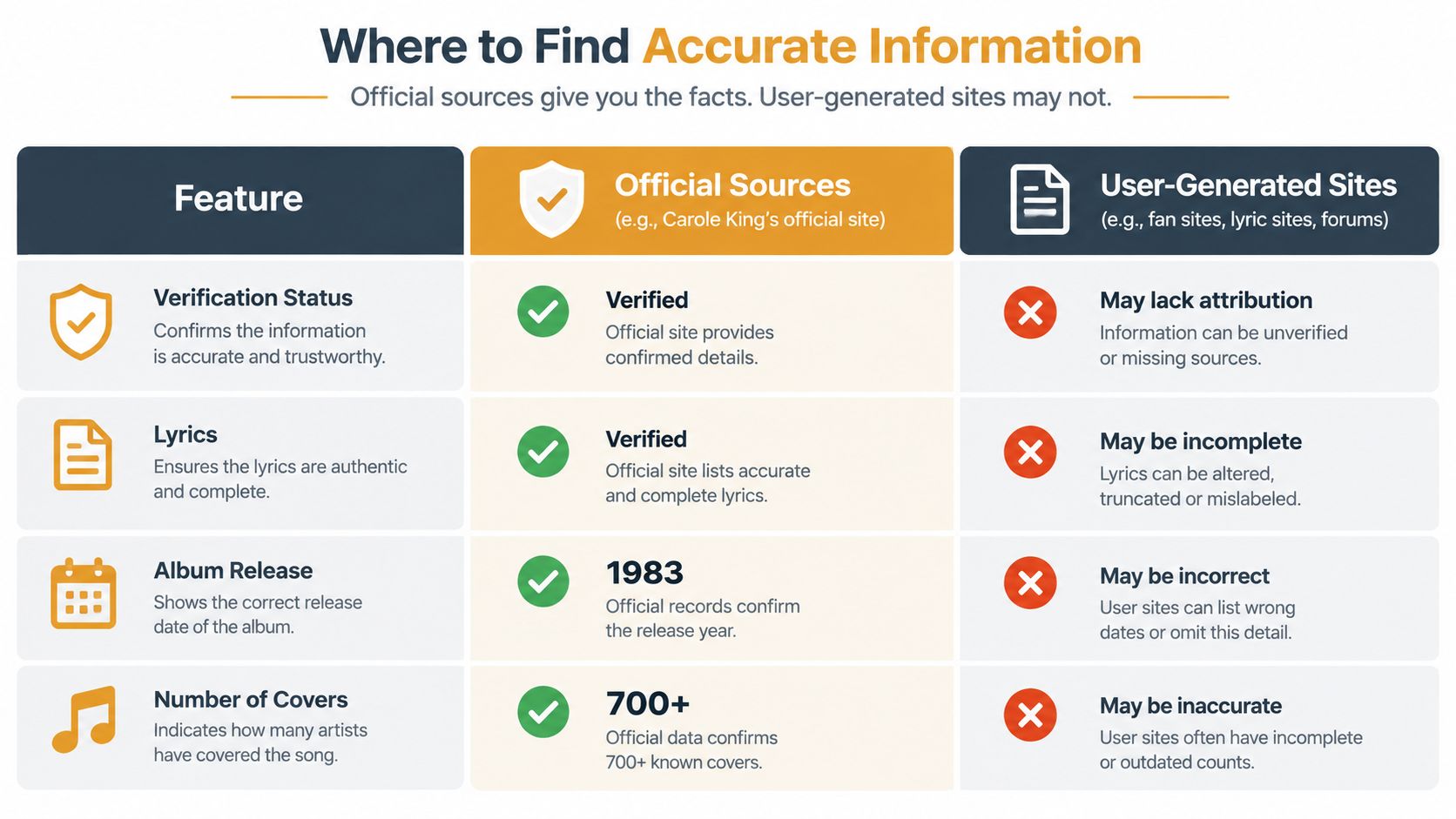
What to compare on a lyric page
| Evaluation point | More reliable source | Riskier source |
|---|---|---|
| Attribution | Names artist, writer, album, and rights context | Shows a title with little or no credit |
| Version control | Separates recordings and compositions | Combines words or credits from multiple versions |
| Editing | Uses a review process or artist approval | Accepts changes without visible oversight |
| Media | Embeds an official or authorized recording | Relies on an unverified upload |
| Discoverability | Links artist, album, and song entities | Treats each page as an isolated text block |
The same principle applies when you're preparing a visual accompaniment. Lyric music video resources can help creators think about presentation, but the underlying words and recording still require accurate credits and appropriate rights.
A polished design can't correct a wrong attribution. Readers should verify the source before sharing a lyric graphic, publishing a video, or using text in educational material. For another example of why song titles need context, compare “Body Electric” lyrics rather than relying on title matching alone.
"How to Find the Correct One Small Voice Version"
Use a short verification routine before you copy or cite any lyrics. It takes less effort than correcting a post after readers point out that you mixed two songs.
Start with the recording
Search the title with the performer or franchise you remember. Use “Carole King One Small Voice” if you recall a singer-songwriter performance. Use “Sesame Street One Small Voice” or “Jeffrey A. Moss One Small Voice” if you remember children's voices or a Muppet-related release.
Check the credits
Read the writer field, not just the headline. Carole King identifies the composition associated with Speeding Time. Jeffrey A. Moss identifies the Sesame Street song. If the page doesn't show a writer, treat the result as incomplete.
Confirm the release context
Look for Speeding Time on the King path. Look for Songs From The Street: 35 Years Of Music, Elmopalooza!, or a Sesame Street performer on the children's path. A date can support identification, but it shouldn't be the only clue.
Inspect the text and source
Check whether the lyric formatting looks editorially prepared. Then ask whether the page identifies the rights holder or explains how the text was verified. This workflow also works for other ambiguous searches, including “Game Over” lyrics, where artist and release context can be just as important as the title.
Before sharing: Artist, writer, album, recording, and source should all point to the same version.
"Using Verified Lyrics Responsibly"
Correct identification is the first responsibility. If you share Carole King's lyrics, label the recording as King's version and connect it to Speeding Time. If you share the Sesame Street text, credit Jeffrey A. Moss and identify the Sesame Street release or performer. Never use a generic title as though it identifies a single work.
The second responsibility is preserving the text accurately. Keep meaningful line breaks, standard punctuation, and any approved section labels. Don't silently “correct” an unusual phrase from a recording, and don't combine lines from a live version, a cover, and a studio release without clearly labeling the changes.
A practical publishing standard
- Name the version: Put the artist or franchise beside the song title.
- Show the writer: Include the composer or lyricist credit when available.
- Link the recording: Give readers a legitimate way to hear the referenced performance.
- Respect rights: Use licensed or rights-holder-approved lyric text.
- Review updates: Check revisions before republishing an old lyric page or graphic.
This approach protects more than legal compliance. It also protects readers from learning the wrong words, performers from receiving incorrect credit, and editors from building duplicate catalog records. Artist-approved text is particularly valuable when a title has multiple compositions attached to it.
A responsible lyric page makes uncertainty visible. If a source can't establish which recording it covers, it should say so rather than presenting an unverified text as definitive. Clear limits are better than confident confusion.
"Quick Reference for One Small Voice Lyrics"
Use this table as a fast lookup tool. The writer and release context are the strongest disambiguation clues, while the typical search intent helps you choose the right path before opening a lyric page.
| Version | Primary Artist | Writer | Release Context | Typical Search Intent |
|---|---|---|---|---|
| Carole King | Carole King | Carole King | First released in 1982, later included on the 1983 album Speeding Time | A singer-songwriter recording connected with King's catalog and collective-action themes |
| Sesame Street | Sesame Street, with versions including Kenny Loggins and The Sesame Street Kids | Jeffrey A. Moss | Released in 1989 on Songs From The Street: 35 Years Of Music, with later franchise metadata connecting the title to Elmopalooza! | A children's song remembered from Sesame Street, group singing, or Muppet-related media |
| Libera | Libera | Verify against the specific recording | A distinct devotional track using the same title | A choral or devotional performance rather than King's or Sesame Street's recording |
If your search began with only the title, stop and add the performer. That single step usually prevents the most serious mix-up. Then confirm the writer and album before quoting or publishing any text.
House of Lyrics offers artist-approved lyrics, visible credits, official video embeds, and organized artist, album, and song pages for clearer music discovery. Visit House of Lyrics to find lyrics with stronger version control and more dependable catalog context.