I Ll Meet You in the Morning Lyrics
I ll meet you in the morning lyrics. Read the official I'll Meet You in the Morning lyrics, explore Albert E. Brumley's credits, and watch the canonical video
Which song do you mean when you search for “I'll Meet You in the Morning lyrics”? That question matters more than it first appears. Search pages often blend Albert E. Brumley's gospel hymn, recordings by later performers, and unrelated songs with similar wording, leaving listeners unsure whether they've found the right text, composer, or arrangement.
The safest way to identify the hymn is to separate three things: the underlying composition, the recording you heard, and the published lyric text. Once those layers are kept distinct, the song's long journey through gospel and country-gospel music becomes much easier to follow.
Table of Contents
- "Official I'll Meet You in the Morning Lyrics"
- "Songwriting Credits and Copyright Metadata"
- "Recording History and Notable Releases"
- "Resolving Lyric Identity and Version Confusion"
- "Navigating the House of Lyrics Platform"
- "Claiming and Managing Artist Catalog Pages"
- "Quick Reference and Metadata Lookup"
- "Related Hymns and Archival Resources"
"Official I'll Meet You in the Morning Lyrics"
Finding the right words is only the first step. A reliable lyric page should also tell you which composition the text belongs to, who wrote it, and whether the displayed words represent an approved version or an unverified transcription.
For that reason, readers looking for the official text should use the artist-approved lyric presentation at House of Lyrics. The platform places verified lyrics alongside official audiovisual material, helping listeners compare the words with the intended performance rather than relying on an anonymous copy.
The hymn commonly identified as “I'll Meet You in the Morning” is associated with Albert E. Brumley and is also indexed under the related opening line, “I will meet you in the morning by the bright river side.” That alternate wording can send searches toward a different page or a different arrangement, even when the listener remembers the same central refrain.
How to read the lyric correctly
Use the displayed text as the composition's core lyric, then treat a performer's recording as a separate layer. A singer may repeat a chorus, alter an introduction, change the order of verses, or use an arrangement that leaves out part of the published text. Those performance choices don't automatically create a new song.
A trustworthy page should make these distinctions visible:
- Composition: The hymn attributed to Albert E. Brumley.
- Performance: A recording by a particular singer or group.
- Arrangement: The musical interpretation, including tempo, instrumentation, and repeated sections.
- Text source: The lyric version supplied or approved by the relevant rights holder.
Practical rule: Identify the composer before you identify the singer. The performer tells you which recording you heard, but the composer tells you which work you're actually searching for.
This approach solves the most common problem with lyric searches. You aren't merely looking for words that sound familiar. You're confirming that the words, authorship, and recording lineage belong together.
"Songwriting Credits and Copyright Metadata"
Could a hymn labeled “traditional gospel song” have a traceable author, composition date, and copyright history? “I'll Meet You in the Morning” can. Hymn and song metadata sources attribute it to Albert E. Brumley, while the related tune record names Brumley as composer and identifies 1936 as the composition year. Hymnary's tune record also records an original copyright by Hartford Music Co. and a 1964 renewal by Albert E. Brumley & Sons.
Those entries function like labels on an archival box. They identify the work, its creator, and the rights trail, rather than leaving researchers with a vague genre tag. Publishers, performers, churches, archivists, and lyric platforms can use that information to preserve attribution and make responsible licensing decisions. House of Lyrics applies the same rights-holder focus to artist-approved text and lineage. For a comparable example of composer attribution on a verified page, see the Body Electric lyrics breakdown.
Why metadata changes the search experience
A page marked only “traditional” removes the clues needed to verify the song. It also blends two separate research questions:
- Which work is this? The answer depends on the composer and composition details.
- Which recording is this? The answer depends on the performer, album, and release information.
The Hymnary entry for the alternate tune wording provides a useful cross-reference when someone searches from a remembered line instead of the exact title. It connects that wording with Brumley, the 1936 composition date, and later renewal information.
That distinction matters because one composition may produce many recordings, arrangements, and displayed lyric versions. A platform that merges them can attach the wrong author, text, or rights status to a familiar page. A verified rights-holder model keeps those layers connected without treating them as interchangeable.
For listeners, accurate metadata explains why similar words can identify different musical objects. For rights holders, it supports dependable credits, permissions, catalog maintenance, and an artist-approved text record.
"Recording History and Notable Releases"
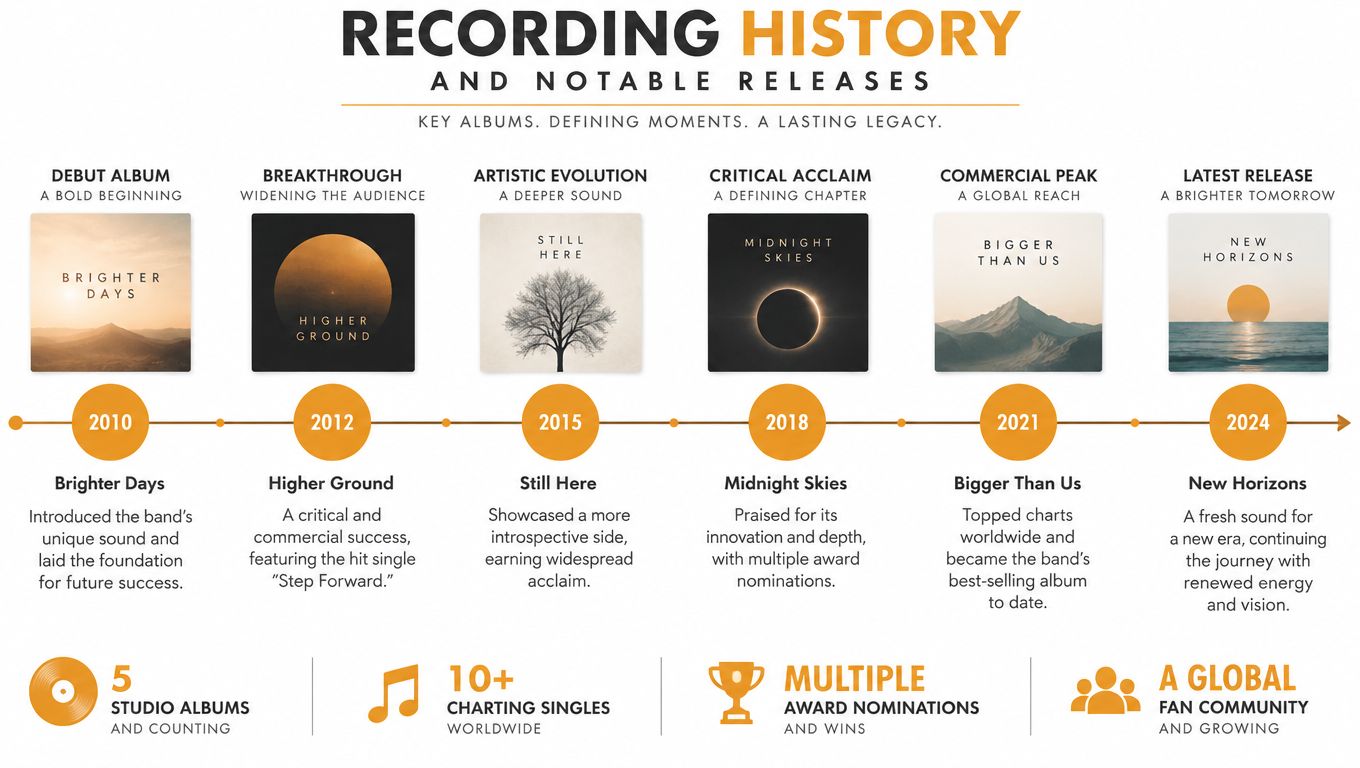
How can one hymn generate so many apparently different lyric pages and recordings? Its documented history provides the answer. SecondHandSongs records J. B. Whitmire and the Blue Sky Trio as making the first known recording on August 22, 1937, with the first commercial release following in October 1937.
That early date matters for lyric research. It places the hymn in recorded circulation long before the later performances that many listeners recognize. It also gives House of Lyrics a firm lineage to present alongside its rights-holder verification, rather than treating every page with similar wording as a separate song.
From early trio recordings to gospel revival
The next documented milestone arrived on May 2, 1940, when Whitey and Hogan recorded the song. The Brown's Ferry Four followed in March 1950, carrying the hymn into another period of gospel and country-gospel circulation.
This sequence resembles a relay. Each performer carries the same Brumley composition into a new setting, preserving its devotional center while changing the vocal blend, tempo, or arrangement. A close-harmony gospel version, a country-gospel performance, and a studio album track can sound far apart while still belonging to one underlying work.
Jimmie Davis with The Anita Kerr Singers recorded the hymn in July 1958, adding another documented link in that chain. From 1937 through the late 1950s, the song moved among performers and audiences without losing its recognizable identity. Those distinctions help explain why a rights-holder-approved lyric record should identify the composition separately from each recording.
The 1960s album era
The hymn continued into the album era. Grandpa Jones's Grandpa Jones Remembers the Brown's Ferry Four is identified as a 1966 release. Skeeter Davis recorded it for Hand in Hand with Jesus, released on April 24, 1967.
Together, these records show a documented release history spanning at least 30 years from the earliest recording period into the 1960s. They also explain the varied tempos, vocal styles, and lyric layouts that appear in searches for the same title.
A recording history is a map of one composition's journey through communities, decades, and performance traditions.
"Resolving Lyric Identity and Version Confusion"
The title creates a particularly tricky search problem because several pages may use nearly identical wording while referring to different entities. One page may present Brumley's hymn, another may identify Skeeter Davis as the performer, and a third may surface an unrelated song with similar language.
The solution is to ask a sequence of identification questions instead of trusting the first matching lyric page:
- Do the words mention the bright river side or a morning meeting? That points toward the Brumley hymn's familiar lyric identity.
- Is the page naming a composer or only a performer? Skeeter Davis is a recording artist in this context, while Albert E. Brumley is the credited composer.
- Does the page identify an album or recording date? Album information identifies a rendition, not necessarily a separate composition.
- Does the wording match the arrangement you heard? A singer may repeat or reorder sections without changing the underlying work.
Version Disambiguation Guide
| Entity Type | Primary Attribution | Key Identifier / Release |
|---|---|---|
| Underlying hymn composition | Albert E. Brumley | Related tune metadata identifies the composition with Brumley and the 1936 composition year |
| Early recorded performance | J. B. Whitmire and the Blue Sky Trio | First documented recording, August 22, 1937 |
| Gospel group rendition | Brown's Ferry Four | Recorded in March 1950 |
| Later album performance | Skeeter Davis | Hand in Hand with Jesus, released April 24, 1967 |
| Unrelated search result | Different songwriter or performer | Similar wording, but no matching Brumley attribution or lineage |
The Skeeter Davis lyric listing illustrates why performer and composition should remain separate in search results. A page can be useful for identifying the words sung by Davis, but it shouldn't cause readers to assume that Davis wrote the hymn.
The same principle applies when researching other songs with overlapping titles. A clear catalog should distinguish title, composer, performer, album, and lyric version rather than placing everything under one broad label. That kind of separation turns “which song is this?” from a guessing game into a straightforward archival task, much like checking the correct entry when exploring another lyric title such as “Cats and Dogs”.
"Navigating the House of Lyrics Platform"
A dependable lyric archive should make verification visible rather than asking readers to trust an unexplained transcription. The most useful workflow begins with the relationship between the artist, the song, and the official video.
House of Lyrics uses an artist-led model in which artists and verified rights holders can control their public pages. Verification involves placing a one-time code in an X or SoundCloud bio, which helps establish that the person managing a page has a legitimate connection to the catalog.

A practical way to check a song page
Start with the artist entity, then move to the album and song entities linked to it. This structure matters because a song title can recur across catalogs, while the artist and album relationship narrows the result to a specific recording.
Next, compare the displayed credits with the information you already know:
- Confirm the artist name. Make sure the performer matches the recording you heard.
- Check the album connection. An album page can distinguish a studio rendition from a compilation appearance.
- Review the composer and lyric attribution. These fields should identify the underlying work, not only the recording artist.
- Use the official video embed when available. The audiovisual source helps confirm the arrangement and performance.
- Look for editorial status. Updates should pass through a review process before appearing publicly.
The editorial workflow is especially important for songs with multiple versions. A page owner may correct a lyric line, standardize credits, or add an official video, but those changes shouldn't appear without review. The platform's explanation of what an editorial review involves offers useful context for readers who want to understand why a verified page may be more reliable than an unmoderated submission.
This process doesn't erase musical variation. It preserves it while making the relationships legible. Readers can enjoy different performances without confusing a cover arrangement with a new composition.
"Claiming and Managing Artist Catalog Pages"
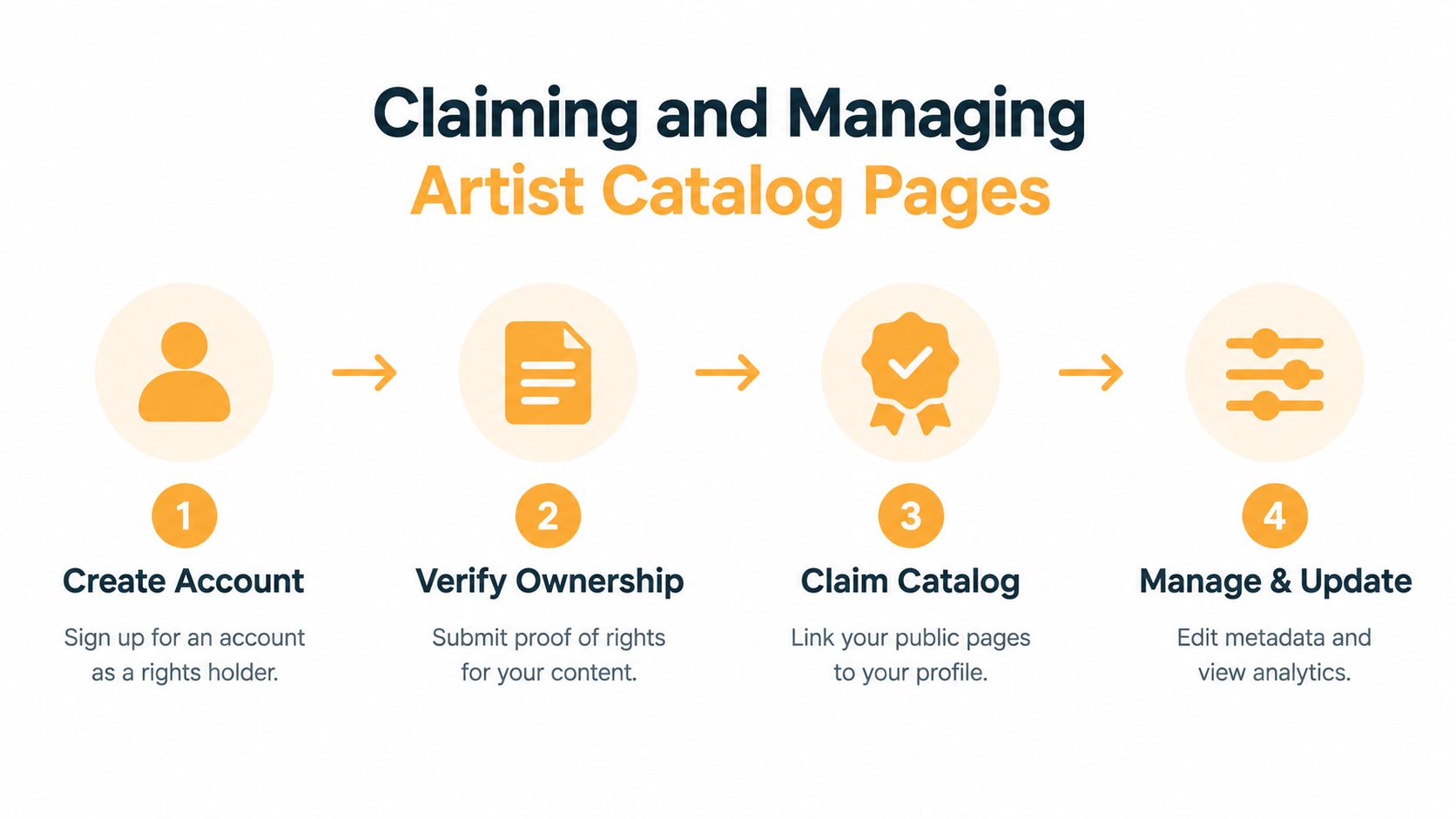
Artists and rights holders often discover that public catalog pages contain incomplete credits, inconsistent titles, or lyrics they didn't approve. Claiming those pages gives the responsible owner a way to correct the record and connect the catalog into a coherent public reference.
The process works best when treated as catalog administration rather than a one-time profile update. Each correction affects how fans, journalists, collaborators, and licensing contacts identify the work.
Four practical steps for rights holders
1. Create an account. Use an account connected to the person or organization responsible for the catalog. Managers, labels, and rights administrators should decide in advance who will maintain the pages.
2. Verify ownership. Follow the verification process and place the one-time code in the required X or SoundCloud bio. This step helps distinguish a genuine rights holder from an impersonator or an unauthorised contributor.
3. Claim the catalog. Link the relevant artist, album, and song pages to the verified profile. Check each connection carefully, especially when an artist has releases with similar titles or collaborations.
4. Manage and update. Use the full-page editor to correct lyrics, credits, metadata, and official video links. Submit the changes for review so the public page reflects an approved update rather than an unchecked edit.
What to review first
Begin with the fields most likely to create confusion:
- Composer credits: Keep the songwriter separate from the performer.
- Album associations: Connect each recording to the correct release.
- Lyric text: Replace incomplete or inaccurate transcriptions with the approved version.
- Video source: Add the official audiovisual reference when one exists.
- Naming consistency: Use the artist's preferred spelling and the composition's recognised title.
Rights holders can start the process through the House of Lyrics catalog claim page. For a hymn with a long recording lineage, careful catalog management doesn't flatten history. It gives each version its proper place.
"Quick Reference and Metadata Lookup"
Which entry matches the composition, and which one matches the recording? That distinction resolves many lyric-identity errors. A performer's album page can identify a rendition without proving who wrote the hymn, while a composition record can establish the work behind several performances.
Composition record
| Field | Verified detail |
|---|---|
| Common title | “I'll Meet You in the Morning” |
| Related lyric wording | “I will meet you in the morning by the bright river side” |
| Composer attribution | Albert E. Brumley |
| Work type | Distinct copyrighted gospel hymn composition |
| Copyright record | Hartford Music Co., renewed 1964 by Albert E. Brumley & Sons |
The Hymnary's Brumley tune record supports the composition identity and related hymn metadata. Use it to answer, “What song is this?” House of Lyrics can then present the rights-holder-approved lyric text rather than treating an uncertain transcription as definitive.
Recording record
| Field | Verified detail |
|---|---|
| First documented recording | J. B. Whitmire and the Blue Sky Trio |
| First recording date | August 22, 1937 |
| First commercial release | October 1937 |
| Other documented performers | Whitey and Hogan, Brown's Ferry Four, Jimmie Davis with The Anita Kerr Singers |
| Notable 1960s recordings | Grandpa Jones and Skeeter Davis |
The song's SecondHandSongs work page helps trace the recording lineage. It answers a different question, “Which version did I hear?” Compare the performer and release context before assigning a lyric variant to the composition itself.
Copy-paste citation template
Use this compact reference when documenting the hymn:
Brumley, A.E. (1936), “I'll Meet You in the Morning,” Hartford Music Co., renewed 1964.
For a recording, add the performer, album or release context, and recording date when verified. If only the title matches, keep checking. Title-only results are a common starting point for lyric-identity mistakes.
"Related Hymns and Archival Resources"
A song becomes easier to understand when you place it beside the records that surround it. For this hymn, that means consulting composition metadata, recording databases, artist catalogs, album pages, and official audiovisual sources as separate but connected resources.
Begin with the composition record. Hymnary is useful for checking the Brumley attribution, the 1936 composition information, the copyright history, and the alternate tune wording. Those details establish the work's identity before you move on to individual performances.
Then follow the recording trail. A recording database can show how the hymn moved from J. B. Whitmire and the Blue Sky Trio through later gospel and country-gospel performers. Researchers can compare dates and performers without mistaking a later rendition for a new song.
A useful archival sequence
- Search the title and alternate opening line. Memory often preserves a lyric phrase more accurately than a title.
- Confirm the composer. Look for Albert E. Brumley rather than accepting “traditional” as a complete credit.
- Record the performer and album. This identifies the specific rendition.
- Compare the lyric text with the recording. Note repeated choruses, omitted verses, and arrangement changes.
- Check the rights context. Preserve copyright and renewal information alongside the lyric.
- Save the source trail. Keep the composition page and recording page connected in your notes.
Fans can also explore related artist and song pages within a structured lyric index. That approach is valuable for press research, church music programming, family archives, and musicians preparing a new arrangement. It lets you move outward from one familiar hymn without losing the distinction between a song's authorship and its performance history.
The central lesson is simple: archiving lyrics means archiving relationships. The words belong to a composition, the recording belongs to a performer, the album belongs to a release, and the rights metadata explains how those pieces connect.
If you want artist-approved lyrics, official video references, and clearly connected composer, artist, album, and song pages, visit House of Lyrics and use it to verify the exact version of “I'll Meet You in the Morning” you're looking for. Artists and rights holders can also claim their catalogs, correct public metadata, and preserve each recording's place in the larger musical lineage.